Romania’s formal social protection spending sits at just 16.1% of GDP against an EU average of 26.9%—the lowest in the bloc (excluding Ireland, whose metrics are distorted by multinational accounting). The state safety net is functionally absent. Citizens cannot simply outsource care to the market or the state.
Naturally, the burden pivots to the household: the family fortress.
This is not a static shelter; it is an active socio-economic ecosystem. When faced with life’s spectrum of crises, whether that be economic precarity, chronic health issues, legal battles or relationship breakdowns, families collectively defend, pooling every available resource—material goods, money, time, skills and labour. This solidarity spans across generations and extends outward through kinship and inter-family networks. Consider traditional weddings, where guests and relatives pool cash gifts to secure neolocal housing for young couples—an investment that is later returned in kind when those couples attend future celebrations. In this way, the family acts as a solid central mass with far-reaching tentacles of shared interaction, socialising survival at every level.
Deeper still there is another asset. One that is more durable: an ambient resilience capable of withstanding chronic long-term tensions and acute shocks. It is a vital life force— an arsenal of perseverance forged entirely in the fires of shared hardship It is a profound strength that atomised, individualistic units simply cannot possess, and as such, cannot draw on in times of need.
Capturing something as sprawling and intangible as the family fortress is inherently slippery. No amount of empirical data can fully blueprint its exact shape or explain away its complexity. And since this is a post and not a sociological tome, we will need to look at approximations or proxies to map the shape of the beast. Put your night-vision goggles on then and let’s see if we can catch a glimpse of its form and make some educated guesses as to what is going on in the nether. First up, we need to select some reasonable proxy indicators and to guide us, we can look to foundational work from Maria Castiglioni and her co-authors in their 2016 study on family formation. She draws out our proxies. See if you can spot them:
“…countries with weak family ties are generally characterised by an early departure of youth from the parental home, as they seek to start their adult lives and achieve economic independence. Housing is often shared with friends or colleagues who are in the same stage of their lives. Years may pass until marriage.
In countries with strong family ties, patterns of leaving the parental home are quite different: young people continue to live with their parents even after they have found a job, and their final departure tends to coincide with marriage….” Furthermore, they note that, “high proportions of elderly co-residing with children or relatives are direct indicators of positive attitudes toward intergenerational care.”
—Maria Castiglioni and Co., “Is the Family System in Romania Similar to those of Southern European Countries?” (Comparative Population Studies, 2016)
We have our targets: the age of leaving the parental home, the age at first marriage, and the proportion of elderly co-residing with family. This data is freely accessible and recent. So let’s see if Maria and co. can clarify if Romania has stronger family ties than Germany in this regard.
Leaving the Nest:Eurostat data (yth_demo_030, 2024) shows that young Romanians leave the parental home at an average age of 27.4, compared to 24.1 in Germany (EU average: 26.3)—that’s a modest 3-year gap. Romanians linger longer in the collective home.
Age at First Marriage: Eurostat (tps00014) and German Federal Statistical Office data (both 2024) show Romanian men marry at 31.5 and women at 28.4; German men wait nearly 4 years longer (35.3) and women 4.5 years longer (32.9).
Eldercare Co-Residence: 2011 Census and UN Population Division data (specifically the Database on Older Persons in Collective Living Quarters) reveal a chasm in institutional care. For adults aged 80 and over, more than 1 in 8 Germans (12.10%) live in collective institutional care, compared to less than 1 in 100 Romanians (0.96%)—making it over 12 times more common for the elderly to be institutionalised in Germany than in Romania.
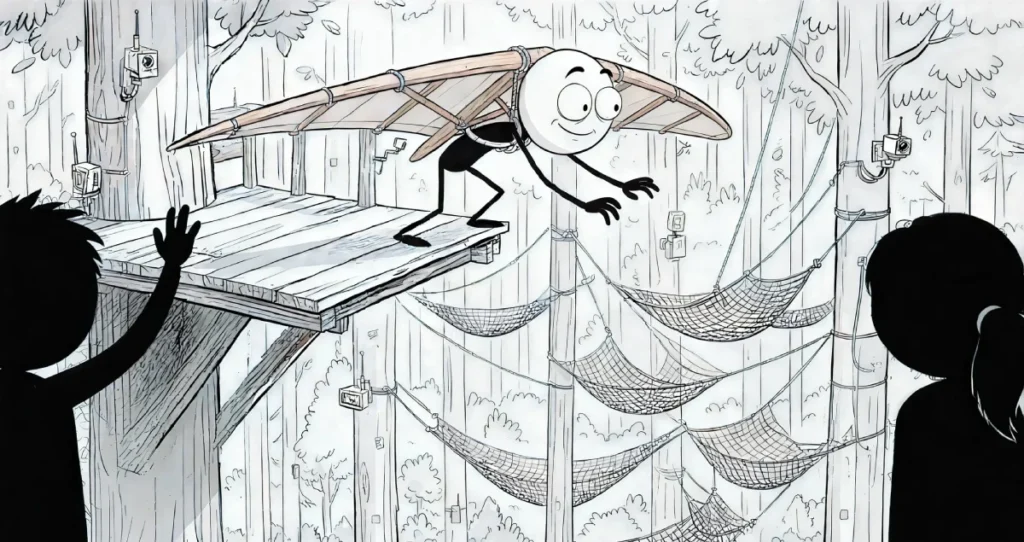
— Mr Smith ready for takeoff from the GERMAN family LaunchpaD.
Putting these proxies together, the family form takes shape in our goggles. The German family functions as an individualistic, open-sky launchpad—just as we see Mr. Smith bravely demonstrating above—where young birds scatter in all directions to soar independently, maintaining regular contact via remote calling rather than any substantial return to the nest. The elderly are gracefully handed off to a robust, bureaucratised state care system perfectly designed to absorb health stresses efficiently and carefully.
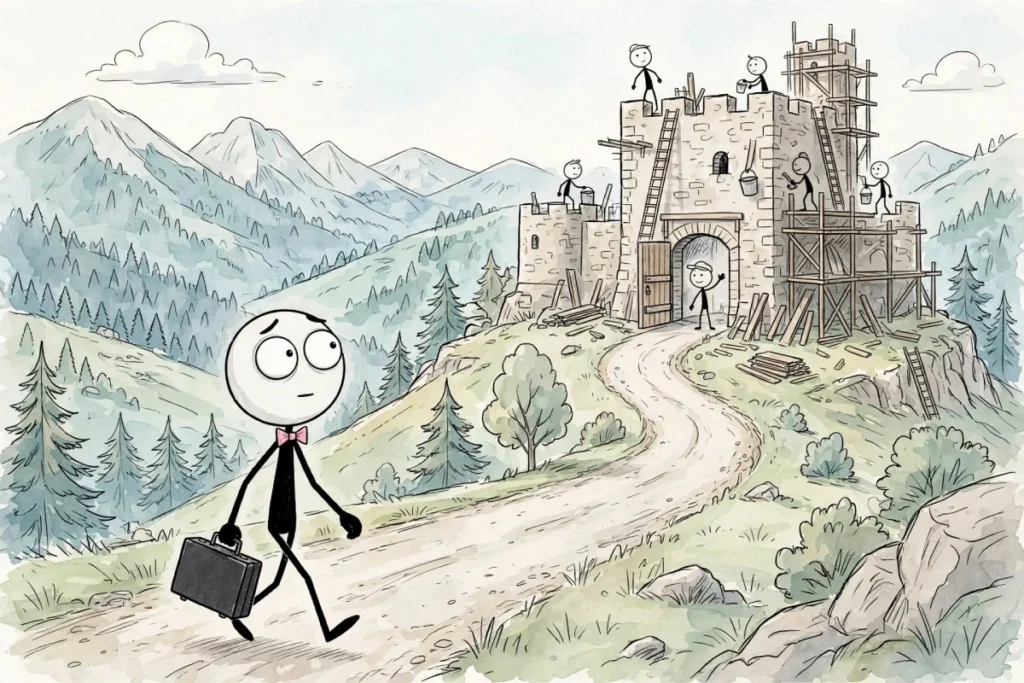
The Romanian family, conversely, functions as a fortified compound under siege. Now imagine Mr. Smith arriving here instead, hauling his suitcase up to the family fortress, ready to be welcomed and absorbed into the chaotic, mesmerizing machinery of the extended family network. It’s crowded, heavy with obligations and generational friction—yet it remains a living shock-absorber built to handle every blow thrown from the outside world. Beneath the noise, it is a lifelong collective safety net where members naturally remain within the perimeter, folding children, newly married couples, and elders into a dense, shared multi-generational space.
— Mr Smith ARRIVEs AT the ROMANIAN family fortress.
The Infrastructure Paradox
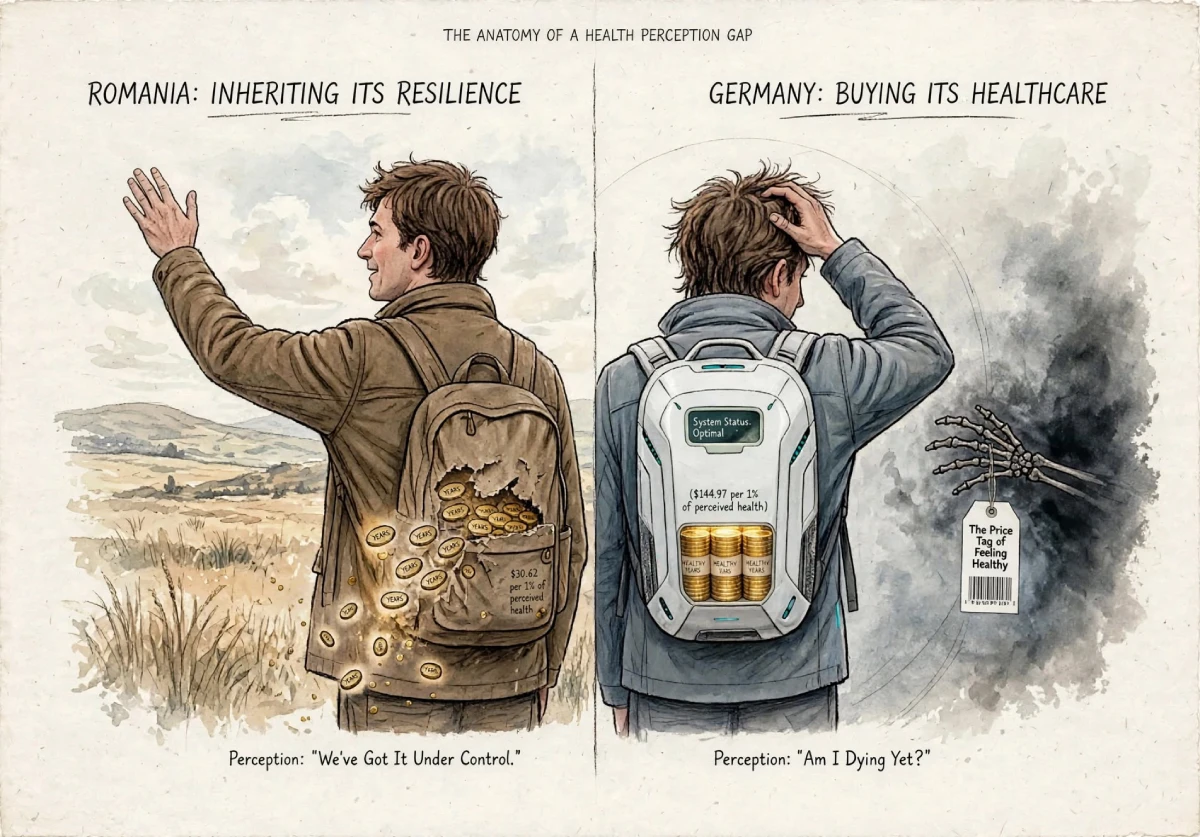
Now that we’ve mapped the physical architecture and structural mechanics of the family fortress, and launchpads, what can we say about that gaping financial cost gap—$144.97 vs. $30.62 for every single percentage point of good health perception? The physical reality of the hospitals a German or Romanian walks into must surely show this funding gulf. Let’s pull some threads and see if we can visualise this disparity on the ground.
To do this we need to look through those proxy night-vision goggles again like we did earlier to map the invisible architecture of the family, but this time we need to choose proxies that indicate the quality of the state’s formal medical infrastructure. A good place to start is the latest Eurostat data on medical tech, beds, and workforce.
Intuitively, one might assume that Germany’s astronomical spending buys an entirely different planet of physical infrastructure while Romania operates out of tents. Yes, I know the first leap: Germany is richer, Romania is poorer, so we’d expect a massive canyon in the availability of costly advanced diagnostic tech like CT scanners and MRI machines. Toss that assumption out the window.
You will be surprised to learn that there’s almost no difference. Caught you there.
Yup, Eurostat data on the density of MRI units and CT scanners (hlth_rs_medim) shows Germany occupying 8th position in the EU with 3.80 units per 100,000 inhabitants, while Romania tracks closely behind in 10th position at 3.08.
The machinery is there.
So, let’s look at the hospital beds. Any difference there? Nope. Eurostat data (hlth_rs_bdsrg2) shows that both Germany and Romania maintain a high-volume short-term inpatient sector, ranking very high—2nd and 3rd across the board for hospital bed availability (Germany at 759 beds per 100,000 people and Romania at 730, trailing only Bulgaria). These are short-stay mechanic garages: patch you up after an accident, fix a sudden medical emergency, and get you in and out.
But what about long-term care beds (LTCs)? These are the beds in nursing homes, residential care facilities, and specialised long-term clinics—effectively, the long-term parking garage.
This is where things start to unravel. According to Eurostat (hlth_rs_bdltc), the Dutch lead Europe at 1,390 per 100,000, closely followed by Germany at 1,187 in second place. And then we drop off a sheer cliff. Romania sits right near the bottom with just 238 long-term care beds. Where are all their elderly long-term patients going? I think we can make a safe guess: the family fortress.
Let’s carry on to a third proxy: the workforce, the human element. When we count doctors and nurses, the gap widens Germany ranks high in the EU with roughly 475 physicians and nurses per 100,000 population, whereas Romania slips considerably to 381, landing off the cliff again in the bottom tier of European rankings. The 2026 Eurohealth Observatory review for Romania highlights the severe workforce shortages and uneven service provision plaguing the health system.
Which walks us straight into a bizarre paradox. When the Ipsos health survey (2025) asked Romanians what they thought was the biggest problem in their healthcare system, most didn’t point to staff shortages (only 26% did)—they pointed to the cost of treatment (44%).
Wait, isn’t healthcare state-provided there? Yes, public coverage exists, but the catch is that out-of-pocket (OOP) expenses have ballooned to account for over one-fifth of total health spending. Pharmaceuticals, dental care, and the shadow economy of informal payments—known locally as atenții (direct cash gifts handed to underpaid medical staff to keep public wards operational)—form an ugly trap that pushes poorer households into catastrophic spending.
Now let’s flip our gaze to Germany. Germany builds a hyper-technological medical machine and boasts high staff numbers relative to the rest of the EU. So how on earth does the Ipsos report show that 62% of Germans cite a lack of staff as their #1 healthcare crisis (while only 18% care about treatment costs)? Surely that complaint belongs to cliff-dropping Romania!
To understand this, we have to look past the hardware and step inside the halls of a German clinic. Data recorded from the Robert Koch Institute (Fuchs et al., 2023) showed a heavy reliance on institutional dependency and formal care rather than family networks. The German patient is medically well-equipped, but day-to-day life is detached from an organic community network.
“Since the introduction of the statutory long-term care insurance in Germany in 1995, the provision of informal care services can be supported by cash benefits or in-kind benefits if the Medical Service of the Health Insurance Funds certified a need of care. Currently, around 4.1 million people in Germany claim benefits from long-term care insurance every month.”
—Fuchs and Co., “Informal caregivers in Germany – who are they and which risks and resources do they have?” (Front Public Health, 2023)
This isn’t just a policy quirk; it’s baked deep into cultural history. French anthropologist Emmanuel Todd did some really interesting modelling of family structures. He classifies Germany under the “Authoritarian Family” model—shared historically with Austria, Scandinavia, and Japan. This structure built a society deeply respectful of rules, order, and hierarchy.
The structural “flip side” of this orderly world is modern Germany’s social architecture. Because extended family units stopped living under one roof, the system successfully outsourced care to the state (Sozialstaat). When life shocks hit—illness, old age, or unemployment—Germans don’t rely on a loose network of extended family to help. They turn to the state.
And as Todd’s model predicts, the downside of relying entirely on state machinery rather than a family clan is that social isolation becomes a sprawling national issue. It’s why roughly one in four Germans report feeling lonely, why the government has experimented with legal frameworks like the “Community of Responsibility” (Verantwortungsgemeinschaft) to let non-relatives legally care for one another, and why 62% of Germans panic over staff shortages: there is no family fortress standing watch.
Romania sits at the exact opposite extreme. With state funding starved, the ground-level reality in state hospitals throws the burden right back onto the household. Walk into a Romanian ward, and you will see relatives bringing their own food, wheeling an IV stand down the corridor, purchasing medicines from outside pharmacies, or staying overnight to provide basic nursing care that an understaffed system cannot provide.
And to quickly check against Todd’s family models, are we still in alignment with him? Yup, we are. He classifies Romania belongs to the “Egalitarian Nuclear Family” model—shared with Southern Europe, Poland, and parts of Latin America. In this structure, deep cultural expectations and tight-knit geographic proximity turn the extended family into an “organic, self-sustaining safety net” that absorbs life’s shocks directly.
As a 2026 review in BMC Health Services Research notes, informal caregivers in Romania play an indispensable role driven by love and obligation, marked by heavy burdens. This communal architecture isn’t just anecdotal: data from a 2022 patient experience study at the Bihor County Emergency Hospital shows that family members accompanied roughly 80% of patients through their hospital stay.
“Family caregivers often provide the majority of daily care. Informal caregivers in Romania play an indispensable role in supporting the elderly, often with minimal formal assistance. Their work is driven by both love and obligation and marked by both burdens and rewards.”
—Lunga and Co., “Informal caregivers’ perspectives on caring for elderly people in Romania: a qualitative study” (BMC Health Services Research, 2026)
Yet—and here lies the paradox—despite the equipment strains and the financial hurdles of the ward, the Romanian patient is rarely alone; family and friend networks naturally step in to keep watch at the bedside. In Germany, by contrast, massive capital buys a pretty good professional machine but with the culture of individual autonomy in full swing it often leaves the patient feeling like they’re holding up entirely alone.
The perceived realities breaking out of these contrasting scenes is a result of the hidden bargain underlying the two societies. When the state steps back, the family steps up.
This forces us to look past the balance sheets of GDP and healthcare spending and look closer at the institutional ironies hiding beneath the surface.
How does this architectural difference in family shape explain why Germany spends nearly five times more capital per capita to secure the same perceived health status?
Layer 1: The Cost of Independence (The Isolation Tax)
The social fabric of the German family space changed from the traditional bourgeois of the nuclear family (now about 70% of households) toward rising shares of single-parent households (15%) and stepfamilies (14%), as noted by researchers like Marion Steinbach (2017). Life courses have become more open and malleable, softening the traditional family. While it would be entirely wrong to paint Germany as a place of family crisis or dissolution—for the vast majority, family relationships remain paramount—the expression of that family life has shifted.
When a German citizen falls sick or grows old in a more individualistic setup, active support is less physically persistent. They are more likely to be absorbed into a rigid, bureaucratic state care system—spending periods entirely alone. That institutional distance creates an isolation tax: a deep-seated psychological awareness that the family isn’t standing watch at the bedside. That background stress corrodes the mind and body, dragging down subjective health ratings despite massive state financial inputs.
Romanians, expecting little from the formal state, retain high operational agency. Per the latest Ipsos Global Health Survey (2025), 75% of Romanians independently manage health decisions using over-the-counter remedies, backed by data showing that 58% systematically rely on family networks for vital logistical and emotional support during health crises.
The constant physical presence of family—cohabitation, shared meals, childcare, and hands-on caregiving—acts as a massive psychological buffer. Even without a high-tech hospital scenario in situ, a Romanian enjoys immediate, non-transactional human solidarity. When a surveyor asks, “Is your health good?”, a person surrounded by such a formidable fortress will more easily evaluate their well-being favourably because they are feeling together and in one piece, —or as one might put it in Greece, “to ‘ho” (το ‘χω), literally “I’ve got it (under control)”. Their baseline vulnerability is entirely absorbed by the collective family fortress. So, with Germany spending nearly five times more capital per capita to secure a health perception that is actually lower than Romania’s, it buys advanced medical tech and high-end infrastructure, but it also creates an isolation tax. The institutional distance of the German state leaves the individual cast adrift, eating away at the German subjective health percentage. Conversely, Romania’s “cheap” system achieves high perceived resilience not because the hospitals are great, but because the family fortress provides a permanent buoyancy effect.
• • •
Layer 2: The Diagnostic Void (Why Feeling Good Doesn’t Mean You’re Healthy)
While Romania’s high self-reported health metrics create a surface illusion of superior well-being, the official Eurostat parameters on Healthy Life Years, 2024 (the number of years a person can expect to live without major health issues) grounds the narrative in a colder reality. Romania does not represent an elite tier of physical resilience across the EU bloc; it tracks as a very middle-of-the-pack baseline.
With 65.0 healthy life years, Romania sits perfectly adjacent to the EU average of 65.2 years. If we pull in a few comparatives to visualise the structure, this puts it far below top-tier performers. For example, a typical Romanian lives, on average, over 8 years fewer without major health issues than an Italian, who enjoys 73.4 healthy life years. Romania also falls noticeably behind its regional southern neighbours like Malta at 70.6 years and Greece at 69.9 years.
With this all coloured in, the crux of the matter comes into sharp focus: a wide void between what is perceived and real-life actuality. High-yield health perception in low-spending Romania is partly a symptom of administrative detachment and disengaged primary care rather than raw physiological vitality.
Because self-reported health is strictly a psychological metric, we have to cross-check it against objective health trends. And the truth is, the long-term trajectories for chronic illnesses in Romania are actively worsening—running in the exact opposite direction to the surface layer of perceived optimism.
For example, chronic diseases are creeping upwards. According to a CES Bucharest analysis, between 2008 and 2023, the impact and mortality footprint of major chronic conditions (cardiovascular diseases, diabetes, and respiratory illnesses) increased by roughly 10%, with respiratory disease mortality doubling. The report notes that these trends expose a systemic lack of early detection and management. Concurrently, diabetes-related mortality spiked by over 50%. These conditions are highly manageable with early clinical intervention, yet their upward surge exposes a diagnostic void, compounded by an erosion of primary care access as fewer citizens—particularly in rural demographics—regularly visit family doctors for checkups. Pathologies are allowed to develop silently and belatedly.
In this light, does high perceived health mean ignorance is bliss?
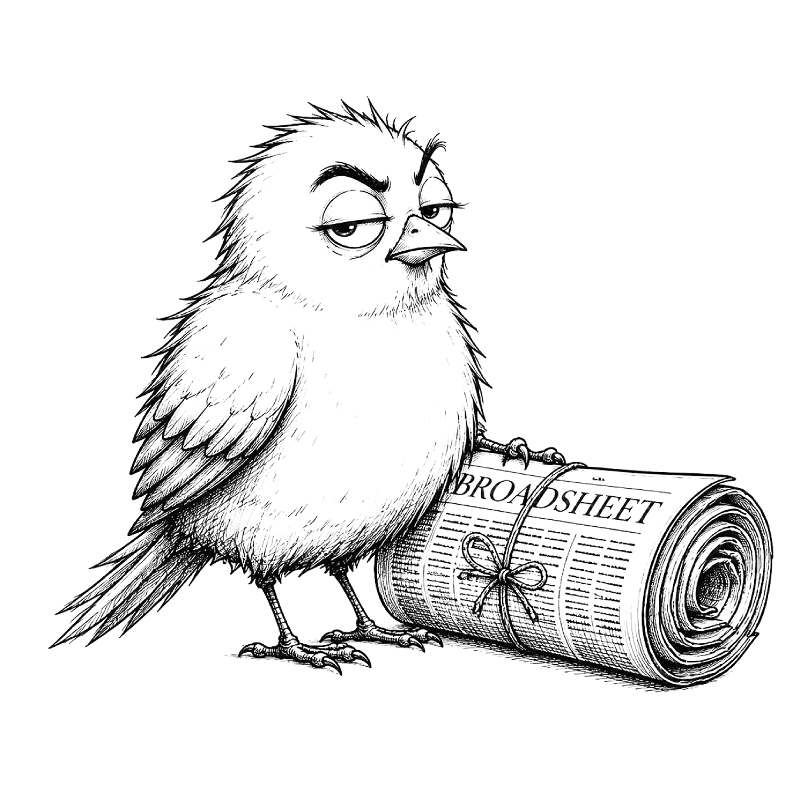
— Mr. Smith illustrates the wide gap between feeling good and being clinically healthy.
No. The point in question is the term ignorance, not the bliss part. Romanians are not reporting high health simply because they neglect or ignore their bodies. On the contrary, they ruminate on their physical and mental states more frequently than Germans do. The Ipsos health data (2025) shows a persistent disparity in daily self-monitoring: 73% of Romanians frequently think about their physical well-being (compared to 63% in Germany), and 65% think about their mental well-being (vs. 54%). Clearly, any assumption that Romanians are stumbling through life blindly is off-base.
The overarching takeaway is clear: Romanians are not physically healthier. They perceive themselves to be because their baseline evaluation doesn’t bottom out into total isolation. The family fortress provides a permanent buoyancy effect, offering an immediate advantage in everyday resilience.
Furthermore, view this through the lens of formal mental health infrastructure. In Romania, where formal clinical frameworks are less developed—with only 21% viewing mental health as a top national problem, compared to 48% in middle-table Germany, where psychological distress is heavily clinicalised and pathologised—health and stress are processed through a domestic, communal lens.
Romanians worry and reflect constantly, but they do so within a shared family matrix. Germans, by contrast, navigate life and health issues within a more individualistic, isolated clinical sphere—turning inward or handing their burdens over to a closed-circuit system of independent health specialists.
Yet this creates a final, counter-intuitive twist when looking at the ground level. According to the Ipsos data, Romanians actually report easier logistical access to local doctors than Germans do (43% agree versus just 32% in wealthy Germany, which feels starved of access). But easy appointments mean little when the downstream clinical framework lacks teeth. Without aggressive early intervention for diabetes or respiratory illness, easy doctor visits and cheerful survey answers mask silent unmanaged sickness.
So, while formal mental health infrastructure in Romania remains practically undeveloped, Romanians aren’t suffering in clinical isolation—they simply aren’t aware of needing a clinical diagnosis. Their stress is absorbed and processed communally through the family matrix, functioning as a collective shock-absorber.
Germany is buying its healthcare; Romania is inheriting its resilience. Two entirely different institutional realities—explaining why two identical humans give two radically different answers to a simple health question.
Ultimately, the twin ironies expose the trade-off: Germany’s hyper-funded system leaves the individual clinically secure yet socially adrift, whereas Romania’s informal network buffers the mind while letting chronic illness slip through the cracks.
The Fortress Trap
With these ironies locked down, we are left with a deeper, more worrying question to ponder: what happens when the fortress becomes too insular? When the family unit closes ranks so tightly that it rejects the formal state or institutional system entirely?
As Alberto Alesina and Paola Giuliano point out in their work Family Ties (NBER Working Paper 18966, 2013), the strength of family bonds comes with a hidden structural tax. In their words:
““…trust in the family prevents the formation of generalized trust, which is at the core of many collective good outcomes, from political participation to the formation of institutions to economic development.”
—Alesina & Giuliano, “Family Ties” (NBER Working Paper 18966, 2013)
When a society relies exclusively on the family fortress, it creates a self-reinforcing trap. Because trust is restricted only to kinship networks, citizens cannot build the generalised, civic trust required to demand or maintain functional public institutions—including a reliable state healthcare system. You don’t trust the public ward, so you rely on family care; because everyone relies on family care, the public ward never gets reformed; and because the hospital never improves, the fortress becomes the only option left standing.
Nor should we romanticise what this fortress actually looks like on the ground. This isn’t a cozy, idyllic tradition; it is a white-knuckle setup born of desperation. The strain it bears is phenomenal, and while it guarantees that someone is always standing watch, it often secures a baseline survival rather than true healing. Families step up because they have to, but sheer love and sacrifice cannot replace basic medical resources—and when lives are forfeited in the gap, that lack is unforgivable.
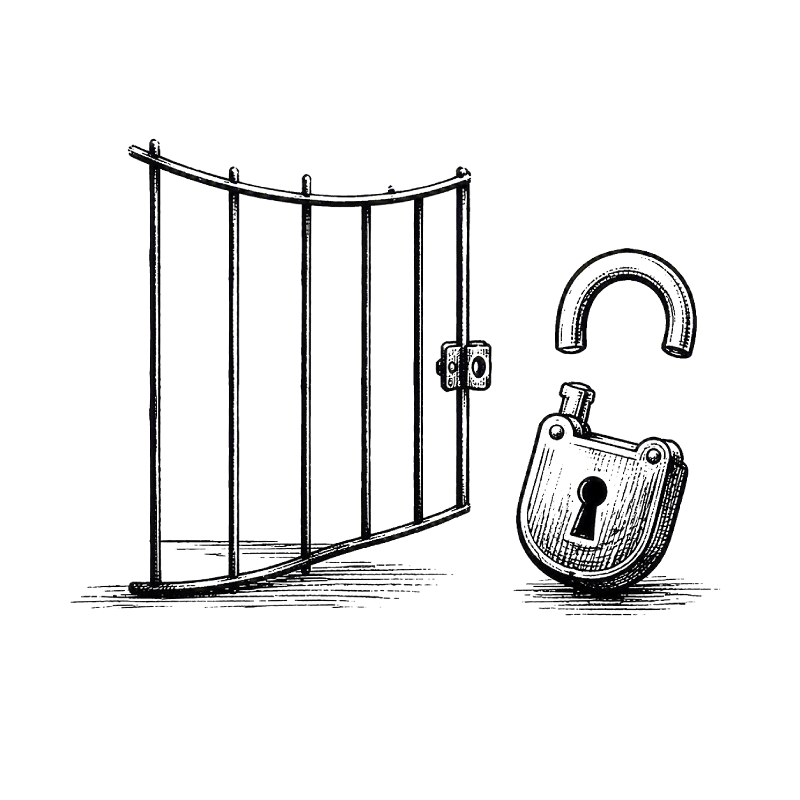
A fortress built to keep the family functioning can easily end up locking them all inside.
The Anxious Mind
So where does this leave us with regards to perception. Is it just a fleeting irrelevance to hard medical reality?
Not quite. But it forces us to confront a deeply uncomfortable truth about modern medicalization: The machine doesn’t just treat us; it measures our anxiety, and in doing so, it often creates it.
Think about what happens when you plug yourself into Germany’s high-tech, bureaucratic health machine. You get routine screenings, preventive check-ups, early biomarker tracking, and an army of specialists. You will probably live longer, statistically speaking. But you are also trapped in a loop of constant evaluation.
Every mammogram, smear test, and blood panel puts you under the microscope. While you’re waiting for the results to drop into your digital portal, the background hum of modern health anxiety creeps in. You are hyper-aware of every cell that might be plotting against you.
Compare that to the Romanian family fortress. Sure, it lacks the aggressive clinical radar of the West. It misses early warnings; it lets chronic issues bubble beneath the surface longer. But it processes human vulnerability through a shared, living matrix rather than a cold clinical file. You aren’t sitting alone in a sterile waiting room scrolling through lab results; you’re sitting at a crowded kitchen table where someone has poured you a drink and told you everything is going to be alright.
So, does the cost matter?
If you measure life purely by biomedical output—raw years added to the clock—then Germany’s $144.97 per percentage point is a logical investment in physical engineering.
But if you measure life by how it feels to inhabit a human body day-to-day, then Romania’s low-cost, high-resilience fortress offers a completely different currency—one that trades biological precision for profound human companionship.
• • •
In essence, we are looking at two very different rides:
One system buys you a longer stretch of smooth highway and a flashy hyper-engineered equipped with a glowing digital dashboard tracking every vital sign. But it’s a lonely drive where you’re entirely on your own behind the wheel, staring out at the white lines in silence. Friends and family wave as you pass from the roadside, but you don’t share the journey with them. You are alone behind the wheel.
The other gives you a rougher, bumpier trip in a crowded vehicle packed wall-to-wall with the family fortress. There’s no high-end diagnostic GPS, the engine is working overtime, and someone in the back seat is always chuntering away trying to backseat-drive. But the cabin is roaring with life, nobody is isolated from the journey, and if a tire blows, ten hands are out the window fixing it before you’ve even had time to panic.
The machine can treat the body, but the fortress holds the line. Yet there is a heavy cost: while the fortress protects the human spirit from isolation, its desperate, informal architecture leaves chronic illness unattended in the shadows. It is an unyielding shield, but it is not a cure.
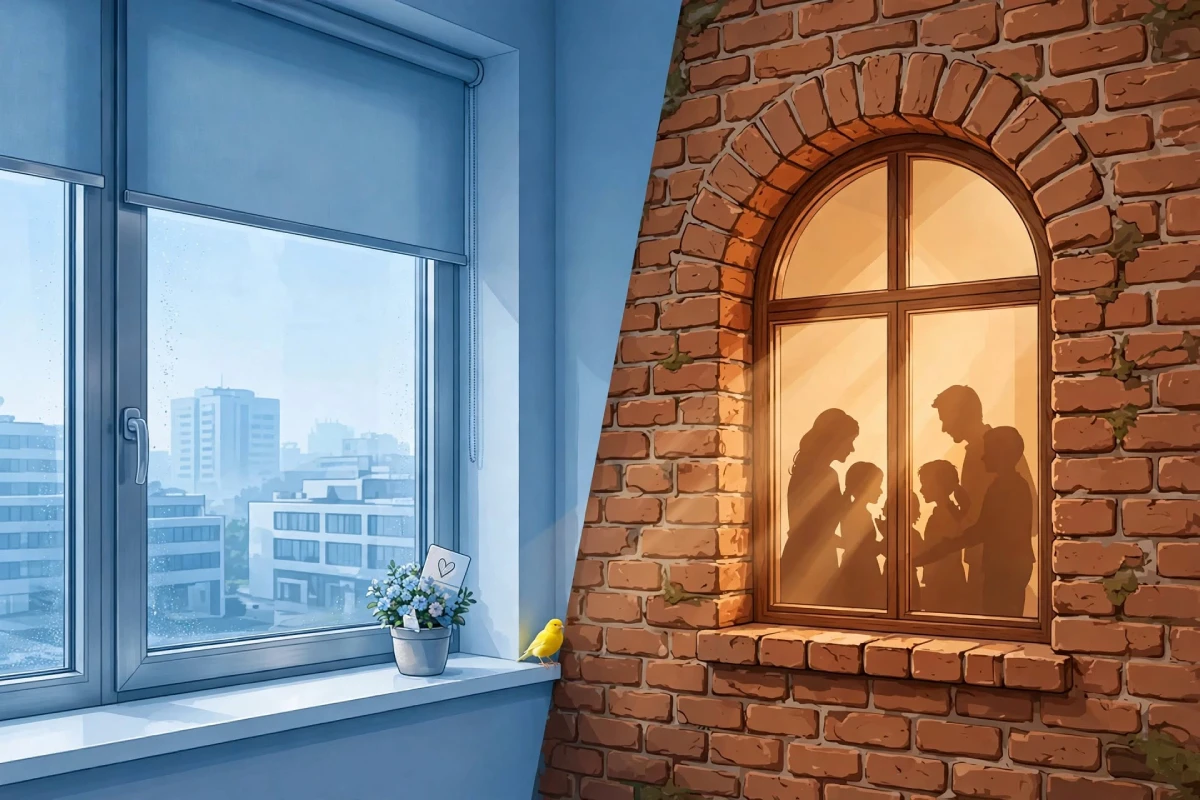
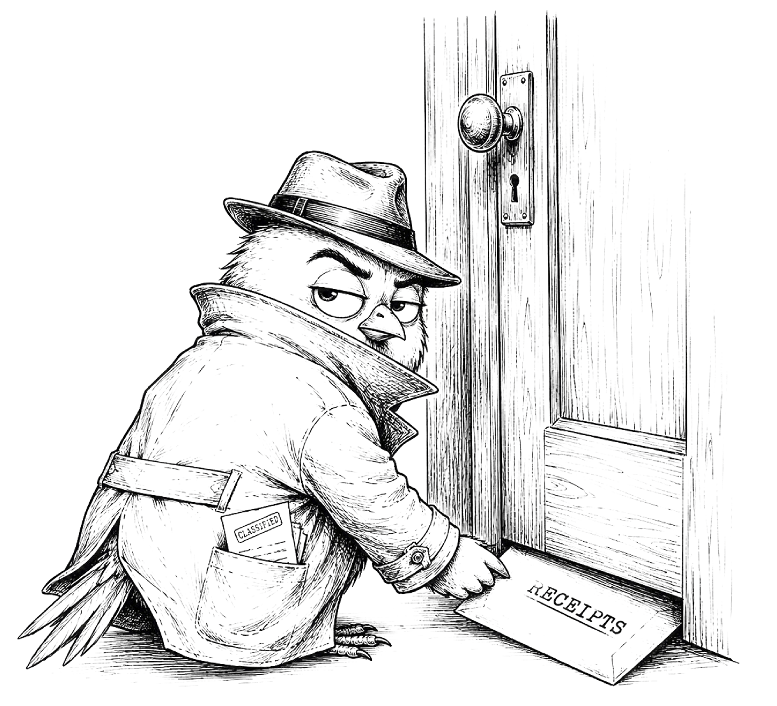
— The Price Tag of Feeling Healthy:It feels cheap to be healthy while you’re quietly losing years. It feels expensive to keep them—because you see the bill
• • •
Over to you
Whenever we look at Western vs. Eastern, or Northern vs. Southern divides in Europe, we always have to hurdle over expectations that flatten every headline into a predictable mix of noise. The disparity we’ve looked at here surmounts that; it is one of those topics that demands a pause to realize the reality is entirely unexpected.
It is genuinely fascinating—and somewhat pausing for thought—for me to write about these independent, nuclear family models. I am inherently steeped in Southern models where family is central to our world. I feel I’m in an interesting position, having been “absorbed” into a Greek family after coming from the UK model of rampant individualism, where you grow up, fly the nest, and become entirely independent. Because of this, I know firsthand that there are significantly different models of families out there today.
We’ve touched on the fortress and the launchpad, but what about other weird and wonderful family structures? Do we have any Boomerang Satellite Families or Commuter Clans out there? I’m almost certain that every country develops its own “national flavours,” and I would be super interested to hear about them in the comments.
A Final Note on Interpretation
Here, I must add my little disclaimer. While I genuinely enjoy unraveling the stories behind the data, I certainly miss threads. Data is often multifaceted, partial, and transient in value, and with my own limits to interpretation piled on top, the resulting stories may be a blurry mirror with some pieces missing altogether.
I have absolutely no intention of offending anyone in these accounts; I simply try to be straight and simple and follow where the data trails wander. I don’t pretend to be anyone special—I certainly don’t work in healthcare, and I’m no sociologist or demographer.
I offer these observations as a starting point for conversation, not a final conclusion. Have I presented the Romanian side or the German side too harshly? And what of this bizarre spiraling of perceived realities against actualities? Please add your commentary below.
Informal Healthcare Payments in Romania:Mosca et al. / J Med Life (March 2023)A five-year (2017–2021) time-series evaluation of patient-reported informal healthcare payments.
Romanians’ Health, Between Perception and Reality:CES Bucharest (2025/26)10% increase in chronic disease impact and decreasing family doctor accessibility.
IPSOS Health Service Report 2025:Ipsos (2025)Cross-country healthcare perceptions and crisis indicators.
Mother, Father, Child – What Does Family Mean Today?:Anja Steinbach Essay (APuZ, 2017)Authored by Prof. Dr. Anja Steinbach (University of Duisburg-Essen).
The Raw Ledger (Cage Datasets & Official Statistics)
Perceived Health Status DatasetSource Organization: OECD Data ExplorerDataset Name: Perceived health status (Identifier: DSD_HEALTH_STAT@DF_PHS)Annual observations for 2024, measuring crude rate percentage of population aged 15+ reporting “Good” or “Very Good” health across 30 reference areas.Direct Access Link: OECD Data Explorer – Perceived Health Status
Health Expenditure DatasetSource Publication: OECD (2025), Health at a Glance 2025, OECD Publishing, Paris.Report Section: Health expenditure per capita (Figure 7.4)Health expenditure per capita in USD PPP, tracking total structural medical investments for reporting year 2024.Direct Access Link: OECD Health at a Glance 2025 – Health Expenditure Per Capita
The Deep Read (Sociology & Family Structure Frameworks)
Emmanuel Todd (1983):The Explanation of Ideology: Family Structures and Social Systems, New York: Basic Blackwell.
Explores the hypothesis that family structure is a key factor in the development of social and political systems, classifying structures according to organizing principles.
Alberto Alesina & Paola Giuliano:“Family Ties,” NBER Working Paper No. 18966 (later in Handbook of Economic Growth, 2014).
Pulls data directly from the World Values Survey (WVS) and European Social Survey (ESS). Direct quote reference pp. 12-13.
Community Dispatch
The Commentary
Have I presented the Romanian side or the German side too harshly? And what of this bizarre spiraling of perceived realities against actualities?
Zero cookies, no accounts, and no tracking. Drop a thought or story below.





Leave a Reply