 Built in The Workshop
The Commuter Read
This is the short version. For the tables, the statistics and the complete references, read the full inquiry: Slaying the Dragon or Duct-Taping Your Windows? Spain vs. Finland →
Mr Smith Shorts
One commute. Now it makes sense.
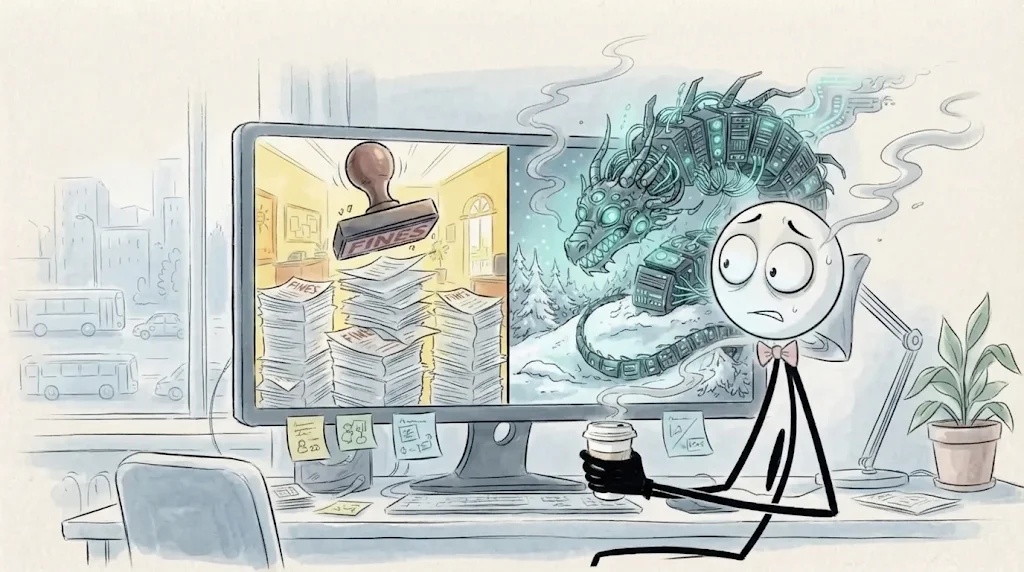
Mr Smith is trying to read the news. His screen is ambushed by a towering wall of dark patterns.
“We value your privacy.”
The cookie monster is loading.
An intrepid explorer, he hunches towards his laptop and hunts for the fabled Reject All button. Three layers of greyscale menus later, he finds it. Victory. Of sorts.
He clicks on a foreign news site. Google Translate is ready. The translation switch is within reach.
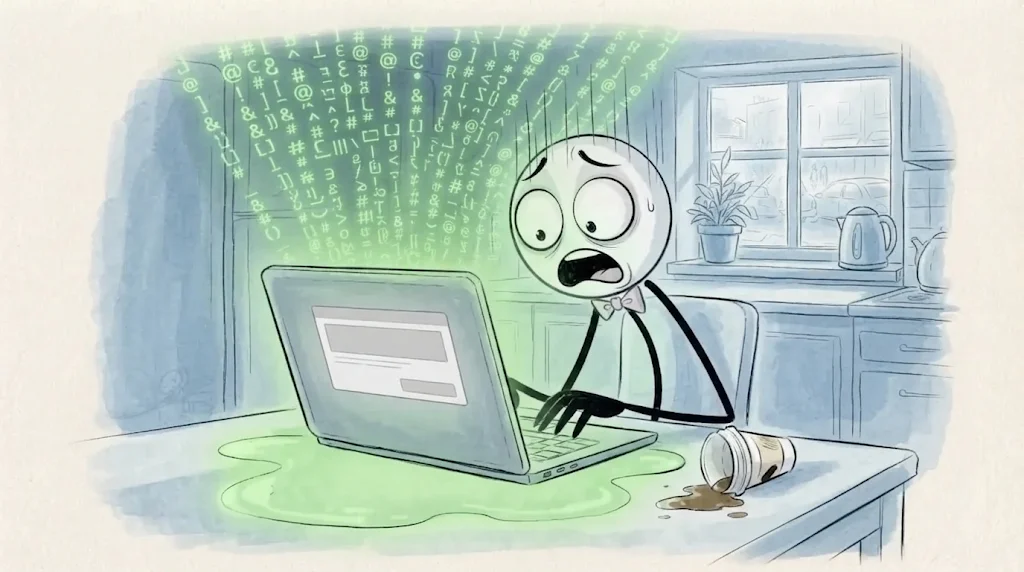
Too late. The consent wall crashes down before the translation can kick in.
His screen fills with flgkjfglj and fdlgkjflkgj. A real Matrix moment.
He gambles on a button, hoping he hasn’t sold his soul to 400 advertising vendors.
Welcome to European data protection. Your rights are protected by law. Exercising them may require a second degree.
Behind those ePrivacy cookie monsters lurks an even bigger beast: the GDPR. Four ferocious teeth.
One set of rules. Twenty-seven countries. Plenty of room for interpretation.
And that’s where things get interesting.
Meet Spain and Finland. Same rules. Very different numbers.
Part 1
Two distinct flavours
Mr Smith scrolls to Spain.
Spain’s data-protection watchdog, the AEPD (Agencia Española de Protección de Datos), was a born activist. Established in 1992, it was defending privacy long before the GDPR arrived, backed by Spain’s constitutional commitment to honor e intimidad — honour and privacy.
In 2014, the Google Spain case helped establish the European right to be forgotten, now a GDPR centrepiece. (Read more in my bigger inquiry on Canary & Onion.)
Mr Smith considers this. So there are people whose actual job is to make the internet forget things.
He looks at his browser history and decides not to get his hopes up.
Then he finds the numbers.
The CMS GDPR Enforcement Tracker records 1,079 enforcement actions for Spain.
Mr Smith pictures a vast Spanish office. Hundreds of officials. Businesses caught in the dragnet, sitting ducks. And a giant rubber stamp descending from the heavens.
THWACK.
Another case.
THWACK.
Another company caught with its hand in the cookie jar.
Now, up north in Finland.
Mr Smith takes another sip and scrolls.
The Finnish data-protection authority, the TSV (Tietosuojavaltuutettu), has just 27 enforcement actions in the same tracker.
Twenty-seven? Spain does that before lunch. Finland barely seems to have drawn its sword.
Perhaps Finland has built a fortress instead.
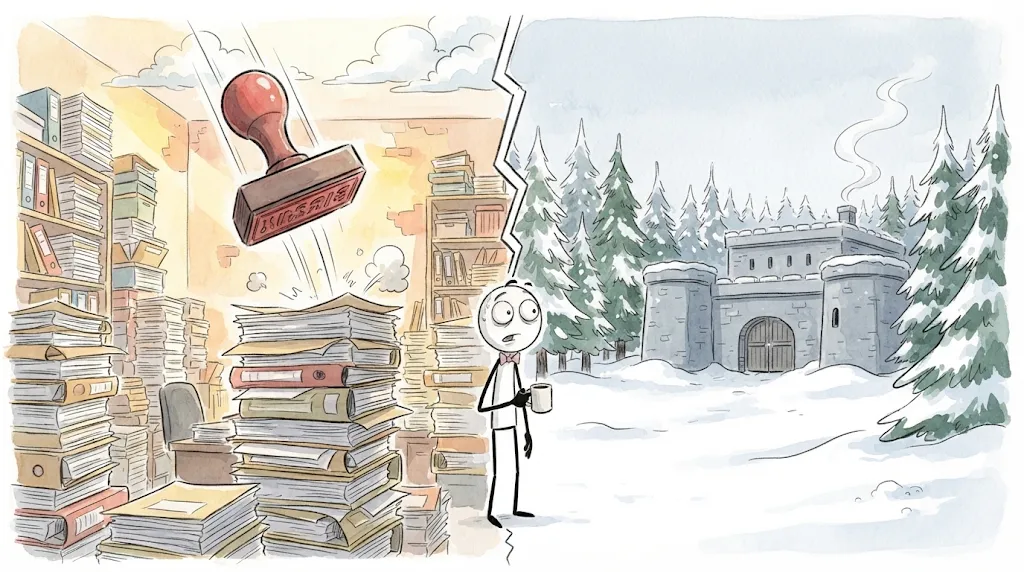
So what’s going on? Is Spain protecting its citizens better? Is Finland playing hopscotch with the dragons? Or are we counting the wrong things?
Mr Smith puts down his coffee.
Time to investigate.
Three clues. One dragon.
Part 2
Clue one: when protection fails
Spain has its dragnet. Finland has its fortress.
But fortresses can fall. And this is where the story takes a darker turn.
The Vastaamo psychotherapy data breach in 2020. The largest and most harrowing privacy scandal in Finland’s history.
People’s most intimate secrets were stolen from psychotherapy records and weaponised in a bitcoin ransom and blackmail against patients. And behind it all, a sickening corporate cover-up.
The innocence died.
Mr Smith’s coffee goes cold.
This was no longer about ticking a compliance box. This was what happened when the digital world failed to protect the human being inside it.
The Finnish watchdog may have fewer enforcement actions on the scoreboard. But the country has had a brutal lesson in what is at stake.
Mr Smith spots smoke on the horizon.
Part 3
Clue two: two beasts
Back in Spain…
The morning news resembles a smouldering pressure cooker of consumer and corporate predation.
Cybercrime accounts for nearly one in five recorded crimes. And Japanese multinational NTT DATA reports 879 serious cybersecurity incidents in Spain in the first half of 2026 alone — a 45% increase compared to the second half of 2025.
Mr Smith raises a single eyebrow.
Small world. Big tech.
Then he spots a glimmer of good news. Attacks on critical infrastructure have fallen by 43.8%.
Problem solved?
Hardly. Spain’s cybercrime problem is a multi-headed hydra. Cut off one head, and another appears.
Now up north…
Mr Smith opens Finland’s September Cyber Weather report from Traficom’s National Cyber Security Centre.
The forecast looks damp. Serious data-breach investigations have more than doubled year-on-year.
Meanwhile, Russian cyber operations hum along in the shadow of the war next door, Chinese probes sniff at network gear. And the 1,300-kilometre border with Russia is still there.
Here, data resilience isn’t fancy lingo. It’s how you contain a threat.
And Vastaamo? That wound hasn’t gone away.
Mr Smith looks from one country to the other.
Spain’s hydra is out in the open. Heads appear. Heads get cut off. The numbers pile up.
Finland is dug deep, watching the gates. Watching for a different beast. The fear runs bone-deep. Survival-deep.
This isn’t a public shove-and-push at the frontline of a compliance battle. The air is heavy with the sense that something could strike at any moment. A crouched, coiled stillness. Always watching. Always ready.
Spain counts the heads. Finland prepares for the fire.
Two countries. Two instincts. But are the people in on the battle?
Part 4
Clue three: the people
In 2025, 69.9% of Finnish internet users changed their browser settings to limit cookies. In Spain, the figure was 32.4%.
More than twice the proportion.
Then Mr Smith spots another difference.
It’s one thing to tweak cookie banners, quite another to stop renting your digital life out to foreign tech giants. Why store family photos, spreadsheets, and private emails on someone else’s overseas cloud servers when you can host them yourself?
To measure that independence, open-source platform Nextcloud calculates a Digital Sovereignty Index — tracking how many people bypass big tech for self-hosted tools.
Finland scores 64.5 points. Spain sits at 7.01.
Mr Smith eyes his Gmail and OneDrive icons. He wouldn’t even know where to start.
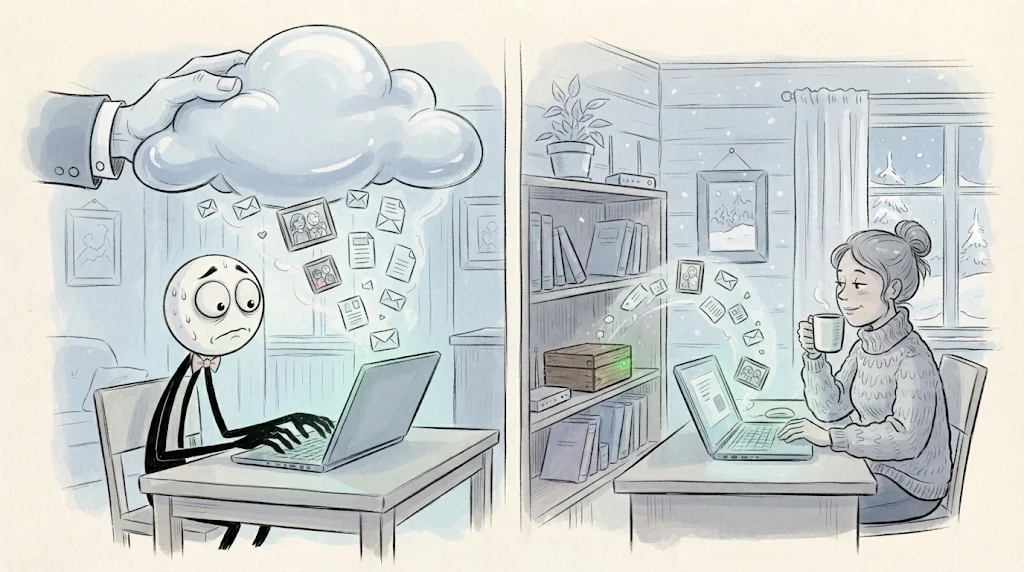
But Finland has a head start: a culture built on open-source software — tools shared, transparent, and built by communities rather than locked behind corporate servers abroad. Linux itself was born there, created by Finnish computer scientist Linus Torvalds.
Digital self-reliance isn’t a foreign concept waiting to be imported; it’s in the water ready to go.
And it isn’t just a techie obsession. Finland’s Digital Independence citizens’ initiative called for reducing dependence on non-EU software in public services and critical infrastructure. It gathered more than 50,000 signatures and went before Parliament.
Mr Smith looks again at the numbers.
The clues are beginning to line up. People are taking more control.
The question isn’t just how many dragons Finland’s watchdog has slain.
It’s what happens when a country decides it needs to learn to breathe fire.
Mr Smith sits back.
Part 5
The thing about dragons…
You can count the battles. You can count the casualties.
But sometimes, the fight changes the fighter.
It is tempting to count fines and declare a winner. Spain’s 1,079 enforcement actions against Finland’s 27 make a wonderfully dramatic headline.
But the scoreboard doesn’t tell the whole story. Browser settings and sovereignty scores can’t tell us which country’s citizens are safer, either.
Spain has built a formidable enforcement machine, with a long history of defending personal privacy.
But Finland’s story runs through darker emotional waters, fed by a nation’s determination to take control of the technology it depends on.
It is cultural. It is historical. It is personal.
Finland knows what vulnerability feels like, from within and from without. It knows what it’s like to be stared down by a bear — and how deep the wounds at home can cut.
That kind of history forges a different instinct. A fire that burns from within: the determination to protect yourself because you know nobody else is coming.
None of this proves that every Finn is a cybersecurity expert, or that Finland has solved the problem. But it helps explain why digital self-defence reaches deeper than a set of browser preferences.
Spain is fighting its multi-headed hydra of enforcement and corporate fines. Finland isn’t just fighting dragons.
By absolute necessity, it has become one.
04 The Open Door · The takeaway
Spain counts the heads. Finland breathes fire. Mr Smith clicks Accept.
Mr Smith swivels back to his screen. He’s still sitting in front of a cookie consent banner.
He has rights under European law. He has browser settings. He has approximately seven minutes before he needs to leave.
He moves the cursor.
ACCEPT ALL.
He has a bus to catch.
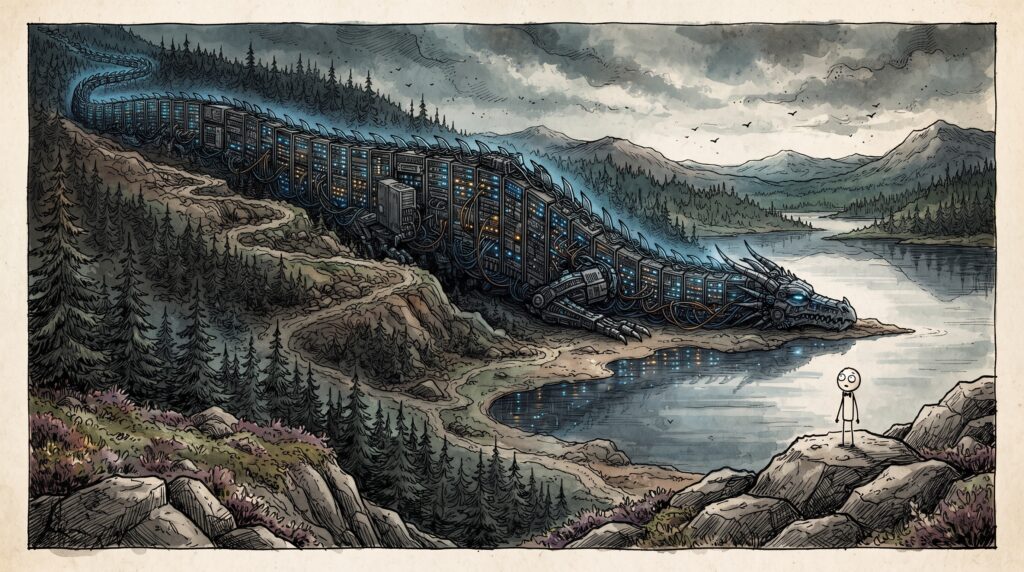

05 The Song · Over to you
Over to you
What’s your verdict?
If you could snap your fingers and replace Google, Microsoft, Apple and the rest of Big Tech with your own private, self-hosted setup tomorrow, would you actually do it?
Tap an answer to vote. Anonymous, no cookies.
2 votes so far · 100% Yes · 0% No
See every verdict →The Dossier
The Watchdogs (Spain & Finland)
- AEPD (Spain): Agencia Española de Protección de Datos & Resolutions Database
Spain’s data-protection authority and its published decisions. - Tietosuoja.fi (Finland): Data Protection Ombudsman & DPO FAQ & Corrective Powers
Finland’s data-protection authority and its enforcement powers. - CMS Enforcement Tracker: EU-27 GDPR Sanction Register
Enforcement actions, cumulative fines and case counts by country. - Landmark Ruling: CJEU Case C-131/12 (Google Spain)
The 2014 judgment behind the right to be forgotten.
The People (Data & Sovereignty)
- Eurostat: Privacy and Protection of Personal Data (isoc_cisci_prv20) & Digital Economy and Society Statistics
Share of internet users changing browser settings to limit or prevent cookies. - Digital Sovereignty Index: Nextcloud DSI Dashboard & DataEthics Review on Finland’s Win
How many people bypass Big Tech for self-hosted tools. - Vastaamo: Guardian Report on the Trial & PRIVASA Research Study
The 2020 psychotherapy data breach and its aftermath.
Want to go deeper? The full inquiry, with the tables, statistics and complete references: Slaying the Dragon or Duct-Taping Your Windows? →
Community Dispatch
The Commentary
Spain’s dragnet or Finland’s fortress: which would you trust with your data?
Answer the question, share a story, or just tell me what you thought.
Zero cookies, no accounts, no tracking.
-
P
Great article Cate. Bravo. Keep up
-

Thanks Petro! So happy you liked it. Mr Smith has more adventures coming. I’ll let you know when the next one’s out. 🐤
Leave a Reply