


THE CANARY • THE REAL-LIFE POV
THE CANARY
Ah, the modern ritual of the web: you land on a news site or a shop, and before you know it, a towering wall of dark patterns ambushes your screen. “We value your privacy,” it mutters, while hiding the “Reject All” button behind three layers of greyscale menus. If you’re like me and rely on Google Translate to parse a foreign-language site, your luck is out—your translation isn’t going to kick in until you clear that consent wall. It’s a proper Matrix moment: you are forced to pick a button without having the foggiest notion whether you are agreeing to basic functionality, or unknowingly nodding through an roster of four hundred advertising vendors.
Welcome to the wonderful labyrinth of European digital governance, where noble intentions collided with bureaucratic creativity and spawned the most universally despised UI element in human history: the cookie banner. What a palaver. To untangle the whys and woes of this latest craze, we must look at the ePrivacy Directive and its big bro, the GDPR.
The ePrivacy Directive (The Grandfather of Annoyance): Passed back in 2002 and souped up in 2009, this was originally built as a targeted rulebook for electronic communications—specifically designed to police slimy spam and those pesky little text files tracking your shopping cart. Instead, it became the legal incubator for every annoying pop-up begging you to accept cookies before you can look at a muffin recipe.
The GDPR (The Heavy Artillery): The General Data Protection Regulation (GDPR) exploded onto the scene in 2018. An EU regulation not a directive. It is biblically vast, covering every scrap of personal data—online, offline, public, or private—while empowering citizens with eight heavy-hitting rights, including the iconic “Right to be Forgotten“. It had ferocious teeth too. Its finest example to date is Meta’s €1.2 billion fine issued by the Irish Data Protection Commission in May 2023 for illegal transatlantic data transfers to the U.S.
Boots on the Ground
What’s actually happening…
Imagine rolling the clock back to 2021, right as cookie banners arrived in their full, chaotic vengeance. If you asked citizens across Europe what any of this digital machinery was actually doing to them, you wouldn’t get a unified continent. Take Finland. Eurostat data showed that 94.5% of Finnish internet users—ranking #1 in the entire EU—understood precisely what cookies were. They saw them for what they were: silent digital footprints tracking movements across the web.
Then look down south to Spain, where baseline awareness sat significantly lower at 73.4% (#20 in Europe at the time). In 2025, another Eurostat dataset showed that only 32% of Spaniards actively managing browser settings to limit trackers, compared to 69.9% of Finns who lock theirs down. Clearly that divide is still here today. Something is amiss. But what is it? We need to look at the unique flavours of the GDPR laws across states, the regulators that feed on them, allowing us to make inferences about why people are behaving the way they do.
1. The Different Flavours of the GDPR Law
How did two nations looking at the exact same EU rulebook end up in such radically different parallel universes? The answer lies in how Spain and Finland translated the over 50 “open clauses” in the GDPR into their own national regulation.
Spain: The Exterminator Net
Spain seized this freedom with gusto through its national companion law enacted on December 5, 2018: the LOPDGDD (Ley Orgánica 3/2018).
Instead of a light touch, Spain built an aggressive legal dragnet. Take Data Protection Officers (DPOs), for instance. They are the independent experts responsible for ensuring compliance to the GDPR for the entity they are registered with. Under the strict EU baseline, a company only needs a DPO if its core business involves regular, large-scale systematic monitoring. This means that most small businesses are off the hook. But Spain decided the net was far too holey and souped it up. Anyone running a private school, a local insurance brokerage, a marketing firm, a healthcare clinic, or a security company, must have a registered DPO (Article 34)—oh, and you’ve got 10-days to register them with the AEPD. Consequently, Spain dragged thousands of mid-sized businesses into their active state database. Public bodies included (Article 77.2). Everyone is literally a sitting duck for GDPR oversight. Spain’s High Court keeps modifying the flavour, keen to apply pressure. Its latest move is the “Request is Processing” trap (Judgment 390/2026)—a ruling that states that the mere act of requesting personal data constitutes processing. Beware anyone who goes fishing for data: that exact microsecond you become liable. Fish or no fish.
Finland: Anyone for Hopscotch?
Just as Spain tailored the GDPR’s open clauses through its own data protection law, Finland did the same, creating the Data Protection Act of Finland (Tietosuojalaki).
Unlike Spain though, Finland took a much more streamlined approach, choosing not to expand the mandatory criteria. For example, with the criteria for registering DPOs, Finland kept it at the baseline. You only need to look at the ratio of DPOs to total enterprises in each country to see the effect of this particular additive on the GDPR.
In 2024, Spain had just over 3.5 million enterprises and Finland a little under 480,000 ([sbs_sc_ovw] EUROSTAT, 2024). That’s roughly a 7-fold difference. Let’s now see the ratio in their total DPO counts. They are chasms apart. Spain’s 2025 annual report states they have 126,176 DPOs, while Finland’s latest data (2023) records 2,704. That’s a 46-fold difference, not 7. And that is just the effect of the minimalist baseline net vs. the dragnet.
While Spain dragged public bodies straight in from day one, Finland’s Tietosuojalaki played hopscotch with theirs, shielding their public and state players from cash fines. The logic being that fining a public office just shifts taxpayer money around. Instead, accountability relied on polite corrective advice and wrist-slaps. As you can imagine, this created a rather awkward, hard-to-maintain illusion of control. The asymmetry was uncouth: private-sector firms would be clappered with turnover-based fines potentially in the millions, while public bodies—which routinely handled tsunami-sized waves of sensitive public data like social welfare, health, and law enforcement files—faced, well, nothing.
Here’s the plot twist, though: the public-sector shield is about to go down the pan. In April 2026, the Finnish Government submitted a major legislative proposal (HE 46/2026 vp) to officially extend GDPR fines to the public sector. It stopped just clear of Armageddon by capping the fines between €500,000 – €1,000,000. This is certainly a landmark shift shutting down a long-standing blind spot.
2. THE REGULATOR SHOWDOWN
Spain’s AEPD: The Bureaucratic Dragon Slayer
The Spanish Data Protection Agency (AEPD – Agencia Española de Protección de Datos) is responsible for the overwhelming majority of Spain’s tracked enforcement actions. With centralised authority over the entire private sector, every local gym chain, high street bank, and telecom giant faces the same single agency in Madrid. This also explains why Spain has clocked over 1,000 traffic-cop style tickets on the CMS Enforcement Tracker.
Born in 1992 and shaped by Spain’s post-Franco constitution, which fiercely protected personal privacy (honor e intimidad), the AEPD was an activist from day one. Any citizen could drag tech giants to court or flood state regulators with complaints. Long before the 2018 GDPR, Spain was already swinging heavy punches—take the 2014 case Google Spain vs. AEPD & Mario Costeja González, which reached the European Court of Justice and resulted in a landmark ruling and the foundation for Article 17’s “Right to be Forgotten.” The AEPD was fearless.
The Mario Costeja González Legacy (2014)
In 1998, a Spanish newspaper (La Vanguardia) published a public notice announcing an auction of Mario Costeja González’s repossessed home to recover old social security debts. Years later, long after the debt was fully settled, typing his name into Google still brought up that bankruptcy notice as the top result. When the newspaper and Google Spain refused to remove or de-index the link, Costeja González took his fight straight to the AEPD.
The agency backed him all the way through the Spanish courts to the Court of Justice of the European Union (CJEU). The resulting landmark ruling reshaped the digital landscape, establishing that platforms holding your index are legally accountable for what surfaces. This single victory laid the structural foundation for Article 17 of the GDPR.
The Frictionless Clearinghouse
For the everyday Spaniard, the AEPD operates at zero cost, requires no lawyers, and carries a legal mandate to investigate every grievance. With doors wide open, it fields over 20,000 complaints annually, triggering a relentless stream of small fines (€1,000 to €10,000) for local businesses and retailers. Yet it also keeps its teeth sharp for corporate giants. Failed cookie guidelines (missing “reject” button on the first layer) tagged Twitter Spain (€30,000) and Vueling (€30,000). Bigger still is the 2022 Google LLC case (€10M fine for secretly passing citizens’ personal data to Harvard), or the massive 2026 Amadeus case (€18M penalty for taking millions of old flight booking records and repurposing them to test a new hotel-matching profiling pilot).
More Than Just a Penalty Factory
The AEPD isn’t just a heavy-handed fine machine; it also acts as a national tech advisor and media outfit. Their digital footprint hums with active projects—from AI warnings to “Las claves de…”, a live-streamed interactive show pulling in hundreds of thousands of views and blog visits. They even run their own Privacy Laboratory (Laboratorio de Privacidad) in tandem with universities and research centers to anticipate technological risks, publishing their own peer-reviewed scientific journal (Revista PIT).
When real-world crises hit, Spain pulls in close to its fellow Cyber heavyweights: INCIBE (the National Institute of Cybersecurity) handles over 122,000 major cyber incidents annually alongside its 017 public helpline, while AESIA (the Agency for the Supervision of Artificial Intelligence) polices code under the EU AI Act—forming a formidable network.
Finland’s Office of the Data Protection Ombudsman: The Quiet Fortress
The data regulator for Finland is the Office of the Data Protection Ombudsman, or Tietosuojavaltuutettu (TSV, established in 1987). It operates more like a corrective watchdog, issuing formal reprimands, corrective orders, and administrative guidance (huomautus) rather than focusing on cash penalties. Finnish tradition heavily favours systemic trust and voluntary compliance over aggressive adversarial policing, meaning the state rarely needs to pull the trigger of a massive fine. Yet “quiet” doesn’t mean idle. The TSV processes over 15,000 new cases a year, of which only a tiny handful result in fines.
Every fortress has its breaking point though and for Finland, that watershed moment arrived with the Vastaamo psychotherapy data breach, the largest and most harrowing privacy scandal in the country’s history.
The Vastaamo Psychotherapy Data Breach
Vastaamo was a major private psychotherapy center network based in Finland. Their electronic health records were handled with staggering negligence: the patient database sat completely unencrypted and unprotected on the open internet without even a basic password on its root account.
In late 2020, a hacker breached the system, stole the therapy notes of tens of thousands of patients, and demanded a ransom of 40 bitcoins (€450,000). To force the company’s hand, the extortionist began leaking the names and notes of 100 patients a day on a Tor message board before targeting individual victims directly—texting and emailing them, threatening the release of their most intimate confessions unless they paid personally.
A subsequent forensic timeline uncovered by the TSV revealed a 18-month corporate cover-up: investigators discovered that unauthorised intruders had accessed Vastaamo’s systems as early as December 2018 and March 2019, with an extortion message left sitting right on the server. Management quietly swept it under the rug.
The TSV’s Sanctions Board dropped a €608,000 fine in December 2021, but by then Vastaamo had already collapsed. With the hacker eventually caught and sentenced, Finland’s era of gentle oversight was over for good.
As Tidy Recounted the Post:
“Not only have I got the information from the patients about — like, name, address, e-mail, phone number, social security number, I’ve also crucially and cruelly got all their therapy notes as well.
So, that’s 33,000 people who were potentially gonna have their deepest, darkest secrets exposed online.”
— BBC cyber correspondent Joe Tidy talking with Jack Rhysider (Darknet Diaries Ep. 159)
Incident Dossier • Vastaamo Breach
Vastaamo became the terrifying wake-up call that ended an era of institutional complacency. Shaken by the leak, regulatory oversight pivoted away from gentle administrative guidance, quickly manifesting in heavy commercial penalties: an €856K fine on retail giant Verkkokauppa.com for indefinite data retention, and a €1,1M fine on major pharmacy enterprise Yliopiston Apteekki for leaking customer data through tracker cookies.
The Interconnected Finnish Web
Much like Spain’s division across specialised bodies, Finland relies on a multi-agency network. At the front line, the Data Protection Ombudsman works hand-in-hand with Traficom’s National Cyber Security Centre (NCSC-FI) to handle cyber incidents and network security. When complex technical questions arise, they are fielded by an independent Expert Board. Finland also distributes AI governance and R&D across many academic initiatives (such as PRIVASA) and divides the newer EU AI Act oversight across fifteen sector authorities, with Traficom steering the ship.
3. The Public View: Ground Reality with Mr. Smith
For the average everyday user of the web, the rules on paper mean nothing on the screen. They see the same identical digital landscape where major tech platforms deploy the exact same tracking pixels, algorithmic funnels, and dark patterns across borders. But what changes is the human expression—and that changes everything.
The human being staring at the monitor responds based on their awareness of the cyber threat landscape and what their digital footprint entails. So, let’s see what Mr. Smith, sitting with his morning coffee, reads in his respective morning paper.
Meanwhile, in Spain…
Mr. Smith opens the paper to a smouldering pressure cooker of consumer and corporate predation. Ministry of the Interior figures show that Cybercrime now accounts for nearly one in five of all crimes recorded across Spain. Computer fraud and online scams account for nearly nine in ten of these, with internet-related forgery jumping 11.3% and illegal access surging 40.7%.
Scrolling down to the business column, a security intelligence report by Japanese multinational NTT DATA notes that Spain recorded 879 serious cybersecurity incidents in the first half of 2026 alone—a 45% increase driven by cloud dependencies and AI-accelerated social engineering. He raises a single eyebrow. Japanese tech tallying up domestic digital misery on the Iberian peninsula. Small world, big tech. He flips the page.
Direct attacks on critical infrastructure—grids, water, and transport—have dropped by 43.8% to 90 incidents, shifting toward softer targets instead. Is that good news? INCIBE is still processing record volumes exceeding 120,000 major incidents a year, alongside a fresh Guardia Civil warning about public Wi-Fi “evil twin” traps. Below the headlines lies the fallout from the FortiBleed attack, sweeping Spanish networks running exposed perimeter hardware into a massive credential-harvesting wave.
He sips his coffee, skimming a fresh Reuters report on the Spanish data watchdog reviewing its very first AI agent-linked breach. Honestly, it’s all completely over his head. He takes another sip and stares out the window.
Meanwhile, up north in Finland…
Up north, Mr. Smith peruses the September 2026 “Cyber Weather” report from Traficom’s NCSC-FI, and the forecast looks… damp. Rain fronts of incidents sweep across the landscape. This month it’s led by a neat new trick: attackers using Adversary-in-the-Middle (AiTM) technologies to bypass multi-factor authentication and breach Microsoft 365 accounts. Phishing has jumped 64%, with routine bank and authority impersonation popping up everywhere, heavily flavoured by generative AI deepfakes.
Malware’s still standard issue, bundled neatly with software bugs and supply-chain tricks. Flipping the page, serious data breach investigations handled by the NCSC-FI have more than doubled year-over-year. He pauses over a notice about manufacturers scrambling to get ahead of advance reporting rules for software vulnerabilities under the EU’s new Cyber Resilience Act. Not entirely sure what device-makers filing 24-hour early warnings to ENISA has to do with his Monday morning, he adds it to the pile.
Sighing, he drops back to general news. Over on Yle, a headline catches his eye: the court has just overturned Yliopiston Apteekki’s eye-watering €1.1 million data protection fine. Well, look at that. They actually got off.
Beneath the local noise sits the usual heavy backdrop: Russian cyber operations humming along in the shadow of the war, Chinese probes sniffing at network gear, and that old, heavy anchor—the Vastaamo psychotherapy fallout still sitting right there in the collective memory. Just wonderful.
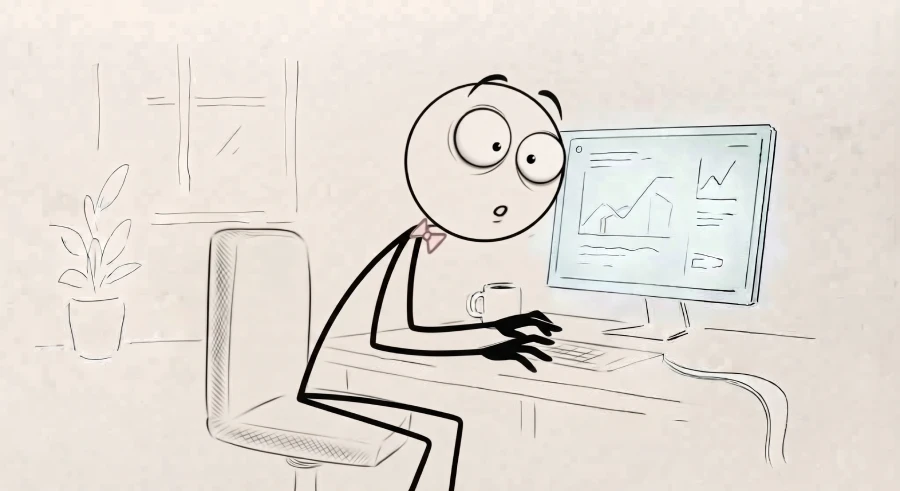
— Mr. Smith, surveying the digital weather


THE ONION • THE OFFICIAL SPIN
THE ONION
Big tech harvests data identically in Finland and Spain. So why does national enforcement look so wildly different? Let’s peel pack those onion layers.
Layer 1: The Armor Illusion
Regulatory Fines are masking the Real Divide
You would naturally expect countries hammered by tens of thousands of digital fraud cases and severe corporate breaches to panic and lock down their digital lives. Yet, public behaviour is telling the opposite story. Why? How can we explain our data cage of paradoxical numbers.
It is tempting to look at swelling regulatory fine counts as a scorecard for safety, but those numbers are misleading. More cases can simply mean better state reporting, different types of crimes that are easier to spot, or closer oversight with more ducks sitting in the net.
No, fines are merely symptoms; they do not dictate the true scale of cybercrime, nor do they measure the risk to everyday users. People have simply grown accustomed to their own nation’s landscape of risk and institutional protection.
According to NTT DATA’s Spanish report, two drivers causing the surging wave of cybercrime: growing dependence on external technology providers and the weaponisation of artificial intelligence. With this in mind, how does our everyday user—Mr. Smith—respond?
Enter: technological sovereignty: the concept of digital independence, meaning we stop the routine practice of renting our digital life out to every foreign tech giant that wants it. Instead of storing your family photos, work spreadsheets, and private emails on someone else’s overseas cloud servers (Google Drive or Microsoft OneDrive), you host them yourself (like a personal Dropbox).
To measure how well nations are actually doing this, we can look at the Digital Sovereignty Index (DSI) metric, developed by open-source software company Nextcloud. The DSI tracks the adoption of self-hosted productivity and collaboration tools per 100,000 citizens across roughly 50 countries—where a higher score means greater digital independence from foreign tech giants, and a lower score signals deep corporate dependency.

— Choosing a lane: Corporate dependency or self-hosted sovereignty.
While the EU average sits at a modest 16.31 points out of 100, the gap between our two countries is vast.
Let’s see how Mr. Smith in Spain and his doppelgänger up in Finland are doing. Are they cyber-healthy and armored up?
Mr. Smith in Spain (7.01 DSI points): Surrounded by a massive state enforcement apparatus, Spanish Mr. Smith lives under an implicit institutional safety net. Because a paper tiger appears to be handling the digital wild west, active self-defense takes a back seat— only 32.4% modify browser settings.
Mr. Smith in Finland (64.5 DSI points – #1 in Europe): Up north, Finnish Mr. Smith operates in a high-sovereignty grassroots ecosystem where self-reliance is second nature. Without towering state paperwork creating a false sense of security, he treats his browser window like a frontline fortification and duct-tapes it shut— 69.9% proactively locking down trackers and cookies.
This gulf brings us full circle to our post question: Slaying the Dragon or Duct-Taping Your Windows? We can reasonably say that the Finnish public is taking substantive independent action regarding their own cyber health. Can we also therefore presume that the reason they’re doing this is because their state is failing them? And can we say that the Spaniards aren’t being apathetic towards their cyber health, rather that they just aren’t being culturally or institutionally prompted to build an independent digital fortress at home to protect themselves? To answer that, we have to look beneath the surface.
So, how do we account for this massive DSI gap? Is it simply technical literacy—that Finnish Mr. Smith knows how to configure a self-hosted Nextcloud server while Spanish Mr. Smith does not? Not quite.
Part of the answer lies in Finland’s deep open-source heritage. Finland is literally the birthplace of Linux, created by Linus Torvalds. Open-source architecture isn’t viewed as a niche, intimidating hobby up north; it is part of the national tech fabric. Finnish developers, academic institutions, and regional SMEs share a multi-decade head start in trusting and deploying independent tools as a default choice.
As Frank Karlitschek, CEO and founder of Nextcloud, puts it so well, the discrepancy we see between Spain and Finland isn’t driven from the top down—it comes down entirely to the people and the small companies:
“The public sector is still largely dependent on big tech…government organizations are deeply dependent on foreign big tech providers, while the people and small companies actually show they care about digital sovereignty.”
—Frank Karlitschek, CEO and founder of NextcloudYet, while citizen and SME grassroots action explains Finland’s soaring DSI score, it doesn’t explain the institutional backdrop—why Spain logs over 1,000 enforcement cases while Finland maintains a streamlined footprint of just 27.
Perhaps what we are dealing with are entirely different species of dragons. Could this be the rest of the answer.
Layer 2: Two Nations, Two Beasts
Why Institutional Power Shapes the Screen
Is Finland busy wrestling with something else entirely? Not the kind of beast that reveals itself in thousands of small administrative fines handed out to local SMEs, but geopolitical and systemic threats that fundamentally shape a nation’s collective reflexes. This divergence runs deep into how each state exercises its power, manages its ledger, and projects its message onto the screen for the Mr. Smiths of this world.
Spain’s Dragon: The Bureaucratic Paper
In Spain, the state fights its cyber battles on paper and through administrative enforcement. The AEPD is uniquely hyper-active on volume, issuing towering piles of fines and processing thousands of complaints ranging. It’s all very visual.
The immediate psychological takeaway for the citizen is clear: This is under control. The super-active AEPD is sorting it. Consequently, the average citizen absorbs the subtle message that digital risk is an administrative compliance issue managed by watchdogs. You don’t need to duct-tape your own windows when an entire regulatory apparatus is publicly guarding the perimeter.
Finland’s Dragon: Geopolitical Survival and Whole-of-Society Defense
Up north, the Finnish state is slaying an entirely different class of dragon. Institutional reflexes are forged in the crucible of collective historical shocks—such as the Vastaamo psychotherapy breach—and a permanent, high-stakes posture against infrastructure probes from Russia and China. Sharing a 1,300-kilometer border with Russia means Finland views “sovereignty” and national resilience very practically, not just as a political talking point.
The Finnish state does not foster an illusion that it can police every phishing email or block every tracking pixel for you. Instead, national strategy treats resilience as a whole-of-society defense task. Infrastructure hardening, digital hygiene, and self-reliance belong to every individual, driving cookie-blocking rates to nearly double the Southern European average.
Yet, this isn’t to suggest that Finland’s authorities engineered this defensive mindset through a top-down awareness campaign. The real driver isn’t extrinsic; rather, it wells up from inside the Finnish citizen. Take, for example, the open social movement of Digitaalinen itsenäisyys (Digital Independence)—a citizens’ initiative to promote self-determination and security. Their petition cleared the 50,000-signature threshold and is now before the Finnish Parliament for debate, demanding that Finland’s public administration, critical infrastructure, and digital services cut their reliance on software controlled by governments outside the EU/EEA. The Finnish people are supported by their state, but ultimately driven by a deep, historical well of geopolitical awareness and survival instincts that Spain simply hasn’t had rubbed into their geographic margins.
THE OPEN DOOR • QUIET AGENCY
THE OPEN DOOR
This is the bit where I stand back and admire the view—a landscape of scattered pieces, upturned and bundled together into a newly interlocking weaving. The deeper I delved, the more it became clear: this isn’t just about paperwork or privacy laws. It’s about how two very different nations react when the ground gives way beneath them.
From my initial impression of “Wow, Finland is somehow missing the cyber-police train, and kudos to Spain for doing so well and clearly managing to pick vulnerabilities to threads,” I am left feeling that the cage of data only gives me a small eyehole to peer through. The edges of the view remain just out of sight, no matter how far I crane my neck left and right to catch a glimpse.
I would love to neatly wrap my newly found piles of information with a bow and offer up tidy solutions. But alas, the species of dragons are numerous. As I see by cross-hairing Spain and Finland, each state faces such a myriad of influencing forces that the answers are entirely unique to each country.
I will, though, have a go with some concluding thoughts. Let’s bring out our main actors.
THE REGULATORS – They are working hard. The TSV and the AEPD operate in such entirely different ways that they’re almost incomparable, save for the fact that they are enforcing the exact same EU GDPR rulebook. Spain’s AEPD hands over a mountain of statistics ready-loaded. Finland’s machinery is much harder to nail down; its story is far more qualitative—and while I can only suspect what lies beneath, it’s hard not to connect it to the shadow of a very different, geopolitically sensitive species of dragon. After all, Spain has its own complex pressures, but Finland has a hostile Eastern border right on its doorstep.
THE PUBLIC (our friend Mr. Smith) – To be honest, when I started looking at the massive gaps in cookie-clicking and penalties, I assumed it had nothing to do with the individual user. We’re all sitting in front of the exact same widespread Big Tech tablecloth, right? I figured the cookie differential must just be mechanical: maybe Finland has an easy “Reject All” button, while Spanish banners are a maze that people trip out of just to escape the pop-up. After all, wouldn’t we all want to be as safe as possible? Wouldn’t we all want the best armor for our digital footprint?
Well, the answer turns out to be far more nuanced. Yes, we all want to be safe in theory. But for the average Mr. Smith, that “want” doesn’t translate into active self-defense; it turns into a passive preference. There is a massive gulf between a right you fight for and a compromise you make simply because there’s no easy way around it. When it comes to sovereign tech, Big Tech holds a total monopoly. Until buying a laptop or starting a small business doesn’t automatically default to Microsoft, Google, or Apple on startup, true digital self-defense is going to remain a long, uphill battle for the Mr. Smiths of the world.
Sure, part of this comes down to environmental factors—like Finland’s deep-rooted open-source culture and technical know-how making it easier to spin up sovereign tools. But the vast differences in digital self-defense—as the DSI made crystal clear—point to something far deeper.
Finding the root of this behaviour isn’t about technical literacy. It’s cultural, forged in fires that algorithms can’t measure. When you look at Finland, you’re looking at a nation that knows down in its bones what happens when things go catastrophically wrong. You can’t fake the collective unity that comes from a national trauma like the Vastaamo psychotherapy breach—when tens of thousands of citizens watched their deepest, most intimate personal secrets get auctioned off by a hacker. Pair that raw, visceral shock with the reality of living next door to a historical regional adversary, and you get a population that understands vulnerability on an existential level. They are a nation that knows what it’s like to be stared down by a bear.
That kind of shared history builds a different kind of reflex. It creates a fire that burns from within to protect yourself, because you know nobody else is coming to save your data.
And that brings us to the final twist. They are both fighting dragons. But while Spain is busy fighting a multi-headed hydra of administrative enforcement and corporate fines, Finland isn’t just fighting dragons—by absolute necessity, it became one.
There’s a difference.
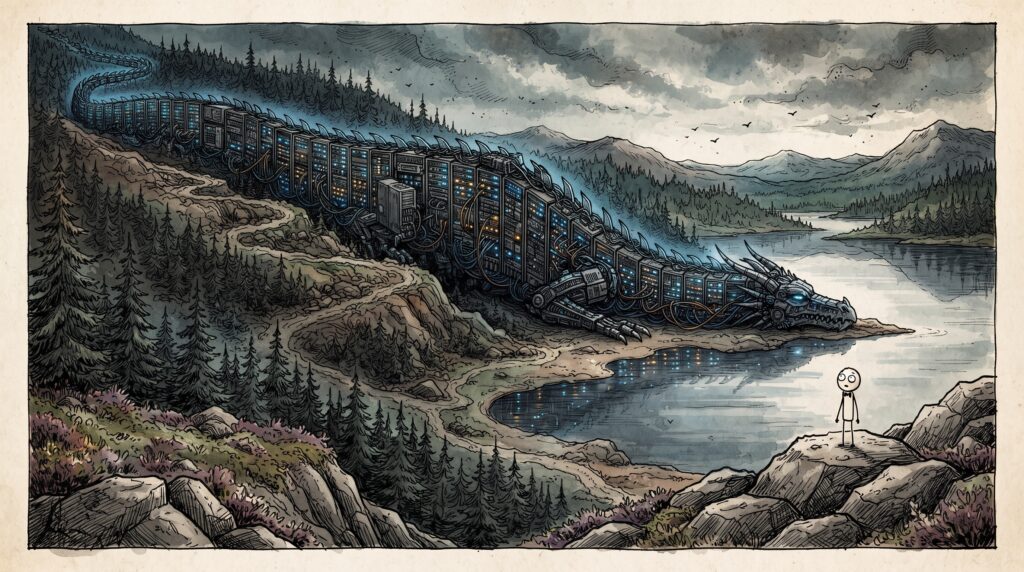
Becoming the Dragon
Over to you
This particular piece was especially meaningful for me to write. I found myself constantly swapping tracks, and that constant self-correction and course-changing was as exciting as it was difficult to land.
I love pulling apart numbers—the crunchier and bolder, the better. I don’t pretend to be anyone special. I’m just a curious person at a keyboard reading the fine print, looking at the data, and trying to make sense of everyday life. I’m certainly not a Linux expert or a cyber criminologist, and I don’t hold academic credentials in data governance.
This conversation was so deep and full of dense branches that I’m pretty sure I trampled straight through some of them and missed others altogether. This was simply me pulling on a statistical thread and following it wherever it led. If I’ve misread a metric or totally missed the mark on something… let me know where and how it matters in the comments below.
 PUBLIC POLL • WHAT’S YOUR VERDICT?
If you could snap your fingers and completely replace Google, Microsoft, Apple, and the rest of Big Tech with your own private, self-hosted setup tomorrow… would you actually do it?
Cast your vote.
👥 0 votes recorded so far
 OFF THE RECORD • UNTRACKED
THE DISPATCH DROP —
Slip Us a Lead
Heard an official figure that sounds like nonsense on the ground? Give us the lead. We’ll check the records—if it’s solid, it becomes our next post.
Stored locally in our queue. We never record IP addresses or digital fingerprints.
Primary Sources & Documentation
The Dossier
[ Click to Inspect ]
 ↓
↓
The Dossier
[ Click to Inspect ]
↓
The Canary (Ground Realities & Frameworks)
- GDPR Regulation: Article 37 (Designation of DPOs) & GDPR.eu Guide
- EU-US Framework: Data Privacy Framework Program Overview
- EU AI Act: Official Regulatory Text & Compliance Portal
- Spain Law: BOE Organic Law 3/2018 on Personal Data Protection ES
- Finland Law: Data Protection Act (1050/2018) via Finlex EN
- Spain Cyberattacks: Demócrata Report on 45% Rise in Incidents & INCIBE 2025 Incident Overview
- Spanish Interior Ministry: Official Cybercrime Statistics Portal (2026)
- Finnish Threat Posture: Traficom & Supo Joint Threat Assessment & YLE National Security Archives
- DNV Cyber Report: Cyber Threats Harden Finnish Attitudes (April 2026)
The Onion (Regulators & Institutional Layers)
- AEPD Portal: Agencia Española de Protección de Datos & Resolutions Database
- INCIBE: Spanish National Cybersecurity Institute
- AEPD Enforcement & Reports: Reuters on AEPD AI Breach Report (Sept 2026), Annual Report 2025 PDF, & 2026 Action Plan
- Landmark Rulings: CJEU Case C-131/12 (Google Spain / Right to be Forgotten) & AEPD Twitter Cookie Fine Overview
- Tietosuoja.fi: Office of the Data Protection Ombudsman Portal, DPO FAQ, & Corrective Powers Index
- Traficom & NCSC-FI: National Cyber Security Centre Finland & 2026 Cybersecurity Review
- Notable Finnish Sanctions: S-Bank €1.8M Penalty (2022) & Sambla Group EDPB Notice
- Vastaamo & Key Audits: Guardian Report on Vastaamo Trial & PRIVASA Research Project Study
The Onion (Sovereignty & Grassroots Layers)
- Digital Sovereignty Index: Nextcloud DSI Interactive Dashboard & DataEthics Review on Finland’s Win
- Digitaalinen itsenäisyys: Official Citizens’ Initiative Portal & Parliamentary Dossier EN/FI
The Raw Ledger (Datasets & Official Statistics)
- CMS Enforcement Tracker: EU-27 Consolidated GDPR Sanction Register Total enforcement actions, cumulative fines, and national case counts.
-
Eurostat Database:
Privacy and Protection of Personal Data
isoc_cisci_prv20Percentage of individuals modifying browser settings to limit or prevent cookies. - Eurostat Statistics Explained: Digital Economy and Society Statistics (Households & Individuals)
The Deep Read (Policy & Architecture)
- Nextcloud Blog: Digital Sovereignty Index Methodology & Findings Primary breakdown explaining how self-hosting adoption and digital independence are measured across European nations.
- APELL Association: Open Source Software Business Association Policy Papers Analytical insights into European open-source ecosystems and public-sector procurement.
- DataEthics EU: Independent Data & AI Ethics Research Organisation Resources advocating for a human-centric approach to data systems through academic collaboration and social advocacy.
The Commentary

Pick your battlefield down in the comments below:
- The National Threat Question: Does a society need a direct national shock (like a hostile border or a massive data breach) to actually care about digital sovereignty, or can we build that defensive fire without a crisis?
- The Trust Question: Who do you trust more to protect your digital footprint: a heavy-hitting state regulator handing out fines, or yourself?
Zero cookies, no accounts, and no tracking. Drop a thought or story below.
Leave a Reply