 Built in The Workshop


The Commuter Read
This is the short version. For the fines ledger, the full timeline and the complete dossier, read the full inquiry: The €1.2 Billion Pantomime: Meta vs. GDPR →
Mr Smith Shorts
One commute. Now it makes sense.
Mr Smith is at his screen, typing a comment on his friend Mikey’s Facebook page. Mikey lives in America and is building a kit car. Mr Smith is in Europe, enjoying the pictures.
Nothing unusual. Just Facebook.
But the moment he hits post, he can suddenly see right through his monitor. A great big glowing pneumatic tube bursts out of the back of it, crashes through his living room wall and sucks up his digital footprint with the force of a jet engine.
His 1s and 0s twist and turn down the tube, branching into subterranean forks until — plop! — they emerge into the bright American sun in front of a munching server-cow.
Moo.
Mr Smith is horrified.
Somewhere along this pipe, his personal data has crossed an ocean. And that, as it turns out, is where the trouble begins.
His profile, friend network, personal history and messages are now part of a vast global system of server farms and mechanical server-cows.
And boy, are the cows hungry.
Moo.
To Meta, this is how global technology works.
To the EU, the problem was where that data went.
One border in particular.
The United States.
And that brings us to the real-world fence around this digital pasture: FISA Section 702.
This is the law that allows US intelligence agencies to collect the communications of foreign targets overseas without obtaining an individual warrant for each target.
And spy they do. This data is vital to US national security. In 2022, 59% of articles in the President’s Daily Brief contained Section 702 information reported by the NSA.
The US has powerful reasons to keep it.
Europe has powerful reasons to demand safeguards for its users.
And Mr Smith’s data is caught in the middle.
The pipe suddenly looks rather less amusing.
Moo.
Part 1
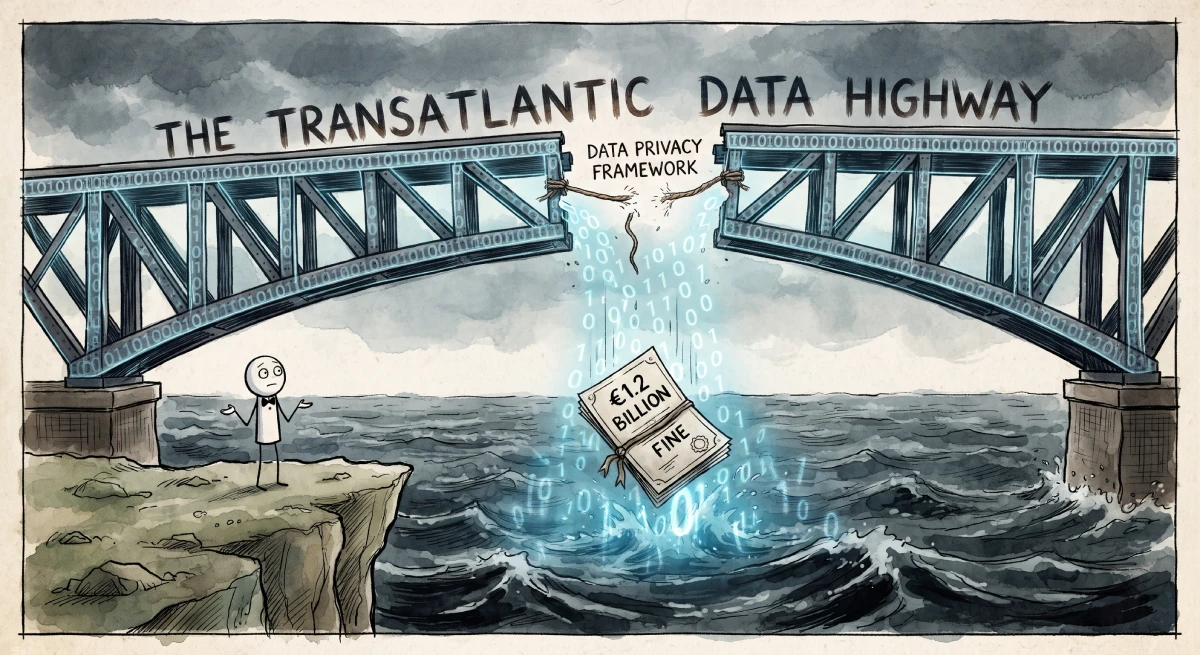
Enter the €1.2 billion fine
After years of legal wrangling, Ireland’s Data Protection Commission ruled in May 2023 that Meta’s transfers of European users’ data to the US had breached European data-protection law.
The fine was €1.2 billion — the largest GDPR penalty at the time.
Mr Smith looks at the pipe.
That’s a lot of money. Surely somebody is finally going to turn off the tap?
Then he pauses.
Meta’s entire system was designed around global data flows. Information is constantly moved, distributed and processed across networks of servers. It isn’t sitting in a neat little folder marked EUROPE — DO NOT TOUCH.
Separating it all out would be like re-engineering an aeroplane while it’s in mid-flight.
Mr Smith imagines the engineers opening up the fuselage, looking for the European data, while the passengers carry on ordering drinks.
The engineering challenge is real. That doesn’t make the unlawful transfers acceptable.

Part 2
Seven weeks later…
Just seven weeks after Meta was hit with the €1.2 billion fine, the political machinery in Brussels and Washington performed its most astonishing magic trick yet.
Out came a brand-new diplomatic deal, boringly named the EU-US Data Privacy Framework.
This was the third attempt to patch the transatlantic data pipe, following the spectacular, smoking crashes of its two predecessors.
And this time, the European Commission declared that the US offered adequate data protection.
Ta-da!
The groundwork had begun well before Meta’s fine, so this wasn’t a deal hastily pulled from a filing cabinet to save the day. But it did offer participating US companies a fresh legal route for transferring European data.
In May, Meta had been fined €1.2 billion and ordered to bring its unlawful transfers into compliance. By July, a new framework had created a legal basis for future transfers.
Meta signed up quickly and went back to business, relying on the new framework to keep the data pipes wide open.
Oh, sorry. Did I say back to business? I meant business as usual, under new paperwork.
Part 3
And what of the €1.2 billion fine?
Well, it hasn’t disappeared. But I’d put the odds of Meta ever paying it at 20%. It’s gone the same way as the rest of Europe’s biggest fines: locked up in appeals, where the money can’t yet be collected.
See my top-tier GDPR fines and read my full inquiry, The Billion-Euro Pantomime.
All the fine achieved was to punish a private corporation for a deadlock created by governments.
And here’s the industry’s worst-kept secret: everyone knew what Meta and other global data companies were doing. Brussels, regulators and Silicon Valley had been wrestling with the same problem for years. The data kept flowing, and the paperwork kept pace — until regulators could no longer turn a blind eye.
The new framework spared Meta the immediate need to re-engineer its global systems.
Crisis averted?
Mr Smith returns to Mikey’s kit-car pictures.
He still has absolutely no idea how to stop the cows.
Or perhaps that’s the point.
America still wants its intelligence powers. Europe still wants stronger safeguards. And the argument over whether those two positions can genuinely coexist is far from settled.
Mr Smith checks the pipe.
Still there.
The cows?
Still eating.
Moo.
04 The Open Door · The takeaway
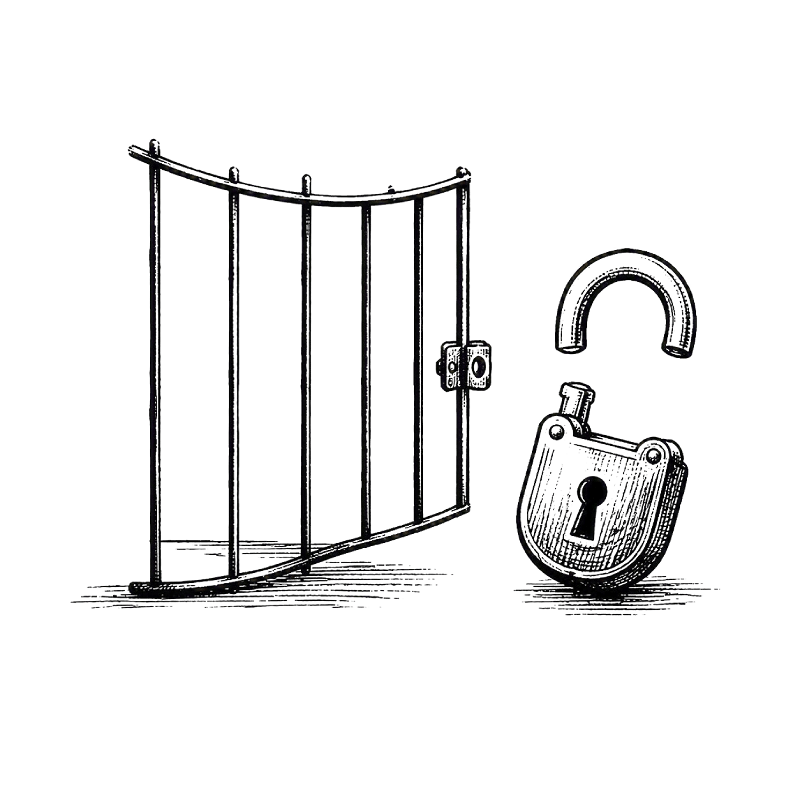
The paperwork changed. The pipe didn’t. The plane kept flying.
The argument is nowhere near over.

05 The Song · Over to you
Over to you
What’s your verdict?
Should Meta carry the €1.2 billion fine for a deadlock governments created?
Tap an answer to vote. Anonymous, no cookies.
1 vote so far · 0% Yes · 100% No
See every verdict →The Dossier · Primary sources
The Fine (Decision & Response)
- Irish DPC Decision: Official Press Release (€1.2B Fine)
The May 2023 ruling that Meta’s EU-US data transfers breached GDPR, with the €1.2 billion fine and compliance order. - Meta Official Response: Corporate Statement on EU-US Data Transfers
Meta’s statement announcing its appeal and its plans for service continuity.
The Pipe (Surveillance & the New Framework)
- FISA Section 702: US Intelligence Fact Sheet & Congressional Research Report
The US surveillance law at the heart of the dispute, and the source of the President’s Daily Brief figure. - EU-US Data Privacy Framework: Program Overview
The July 2023 framework that gave Meta a new legal route for transatlantic transfers.
Want to go deeper? The full inquiry, with the fines ledger, the Schrems history and the complete dossier: The €1.2 Billion Pantomime →
Community Dispatch
The Commentary
Is a record-breaking GDPR fine that never gets collected a legitimate deterrent?
Answer the question, share a story, or just tell me what you thought.
Zero cookies, no accounts, no tracking.
Leave a Reply