


THE CANARY • THE REAL-LIFE POV
THE CANARY
The gap is hard to ignore. In Cyprus, about 3 in 4 people (76.4%) meet up with friends face to face every single week, claiming the top spot across the entire European Union. In Poland, it’s just over 1 in 4 (28.8%). With Germany sidelined by unreliable data flags across the series and Estonia reporting insignificant weekly counts, Poland at rank 25 gives us our firmest, cleanest benchmark at the bottom of the table.
Behind those numbers are two totally different ways of living a day. In the Eastern Mediterranean, there is a phrase for running into someone and falling into casual banter: you catch a conversation (πιάνεις κουβέντα)—like grabbing something already floating in the air. Does Poland lean instead toward what people there call a chwila dla siebie—that quiet, restorative ‘moment for oneself’, a gentle carving out of personal space after a demanding week?
So, take an imaginary evening stroll with me. Let’s head down to the central πλατεία (plateia) in Nicosia where people effortlessly ‘catch’ each other mid-stride, turning the pavement into one big neighbourhood balcony. Then we can take a quick jaunt over to Kraków and take a sneaky peek over the neat hedgerows of a działka (allotment), where a gardener prunes a dwarf apple tree behind a latched wooden gate, guarding a quiet haven after a long week.
What does making time for friendship actually look like between these two rhythms of life?
Boots on the Ground: The River and the Block
Cyprus: Life in the Social Stream
In Cyprus, contact with friends is an ambient condition of the day rather than an appointment in a diary. Spend an ordinary week observing the streetscape and social life reveals itself through repeated, low-friction encounters. A coffee can easily stretch across two hours. People sit, talk, scan passers-by, spot an acquaintance, drag over another chair, and continue.
The public realm functions as an extension of the living room. Cafés, tavernas, and roadside tables provide a permanent backdrop where the people simply sit and talk together. They don’t necessarily have a distinct activity. The social activity is the sitting and talking. Cafés operate as social anchors from morning to midnight rather than pitstops just to buy a drink. The Nicosia Tourism Board tells of this ‘lingering’ nature of cafes, designed around staying: where you really can just sit for hours over a single inexpensive drink without being handed the bill or asked to leave.
“People from all walks of life gather, chit-chat, and savour their java for hours on end. As for the ideal time to enjoy coffee, well, there’s no such thing as a bad time. How many hours can one chat and sip coffee? There is no set limit!”
—Taste Nicosia, Nicosia Tourism Board (2024), p. 7Home visits and hospitality follow the exact same rhythm. There is a strong, informal “come round” culture: someone drops in and gets offered coffee, fruit, or sweets without the host needing prior notice. Balconies serve as year-round meeting rooms—if it gets cold in January, someone wheels out the gas heater, someone else shrugs on a jacket, and the conversation rolls on.
Seeing friends rarely looks like a formal “social occasion.” It is simply embedded into ordinary chores and the natural run of the day. Mind you, don’t get the wrong idea: this doesn’t mean Cypriots are throwing endless house parties. It just means they are continually bumping into people in the normal course of daily life.
Cypriot social connections are remarkably porous. Rather than keeping people tucked away in separate, deliberate boxes, daily life blurs everyone together into a continuous stream: friend → cousin → neighbour → former schoolmate → colleague → family friend. Catching up takes next to zero effort—a chat outside a shop, a quick drop-in, an impromptu souvlaki after work, or hanging out with mates at the πλατεία. These run-ins can last two minutes or stretch on for two hours, and almost none of them are formally scheduled in a diary.
Friendship is simply built into the background noise of the day—whether sustained over a prolonged coffee or caught on the move while out working or running errands.
Poland: The Curated Space
In Poland, friendship occupies a much smaller, highly compartmentalised corner of daily life. This is not driven by any lack of cafés. On the contrary, Polish cities have experienced a specialty coffee boom over the past decade, and café norms certainly allow someone to sit for hours over a single cup without being rushed out. But having permission to linger does not make the café the lived anchor of everyday friendship.
Instead, Polish free time is far more domestic, centred within the household or spent quietly alone. Meeting up with a friend is just one optional activity among a wide range of solitary pursuits. It is tempting to write this off as the lifestyle of rushed, big-city professionals in Warsaw or Kraków. But the hard data tells a nationwide story. According to a representative national survey (CBOS, 2026), when Poles across the country were asked whom they prefer to spend their downtime with, the nuclear home and personal solitude accounted for over 80% of choices:
- 43% prefer spending free time with a partner
- 21% prefer to be completely alone
- 16% choose their children
- 13% choose friends or acquaintances
The activities that fill the average Polish week reflect this inward focus: reading books (27%), watching television (18%), sports and exercise (18%), walking (16%), resting (14%), and tending allotments or gardens (13%). Actually visiting friends or hosting guests was cited as a regular pursuit by only 9%, while public cultural outings registered at just 3%. Friendship is a minor slice of the pie rather than its main ingredient.
Where the Cypriot social fabric is porous and continuous, the Polish week is divided into distinct, intentional blocks:
book / screen → private exercise → partner time → domestic tasks / garden → family dinner → planned friend visit.
In this landscape, meeting a friend is not an ambient byproduct of walking out the front door. It is a planned event that must compete against domestic tasks, family routines, and solitary recovery. Getting together with friends happens far less frequently because face-to-face meetups must fight for space in a domestic routine that already has its hands full.


THE ONION • THE OFFICIAL SPIN
THE ONION
When we look at a glaring gap like 76.4% versus 28.8%, you would be a rare soul not to immediately think: “Oh dear, Poland is falling apart, while Cyprus has it all sorted.” We stop seeing ordinary people making sensible choices about their evenings. Instead, we see a deficit. A problem. A crisis that needs fixing. You can practically hear the policy briefs rustling as committees scramble to decide what to do next.
So, I decided to piecemeal this together. Is this metric genuinely a cry of alarm, or is there much more to it? Does anything actually need fixing here?
Digging into the papers, I cornered three potential onion-layer gremlins that bring the institutional house of cards down—or at least leave it looking extremely rocky:
- The Loneliness Panic: Why policy briefs assume a “breakdown in connection,” when Poland simply has a friend meetup deficit, not a friendship deficit.
- The Scheduling Tax (and the Porous Hour): Both countries clock near-identical 40-hour workweeks, yet treat the remaining hours under completely different rules of engagement.
- The Material Alibi: The institutional habit of blaming commercial coffee prices and scarce park benches—neatly contradicted by Warsaw’s sprawling green spaces and Cyprus’s thriving café culture.
So, let’s peel back the layers to see what the official reports capture, what they might miss, and how everyday habits are shaping the numbers.
Layer 1: The “Loneliness Panic” vs. The Friend Meetup Deficit
To European policymakers, not seeing your mates on a regular weekly basis isn’t viewed as a personal preference—it’s treated as a measurable public health risk. Pan-European reports take one look at low meetup numbers and immediately sound the alarm on social fragmentation and societal decay.
The European Commission’s Joint Research Centre (JRC) treats peer contact frequency as a primary health indicator:
“Other factors related to the social relationships to be considered are the size of the social network, frequency of contact with people in this network and the quality of the relationships. Having a larger social network is associated with lower levels of loneliness… and so is a more frequent contact with others (especially friends, more than family members).”
—Who Feels Lonely in the European Union? (European Commission, Joint Research Centre, 2024)In Poland, state bodies sound just as anxious. In its national report, The Feeling of Loneliness Among Adult Poles (2022), the state demographic body Instytut Pokolenia frames declining face-to-face peer encounters as a civilisational threat driven by modern atomisation:
“The profound atomization characteristic of the modern world leads to a lack of many ordinary human connections that were once commonplace. They have been marginalized by digital communication. Smartphones and social media have led to new forms of isolation and loneliness. Such tools constantly distract people from engaging in face-to-face communication, from direct contact with people in their environment, even with those closest to them.”
—The Feeling of Loneliness Among Adult Poles (Instytut Pokolenia, 2022), p. 7The report leans on international public health studies to argue that resilient communities require constant peer mingling:
“…communities from various countries and regions that function better, whose members live longer and healthier, and work more effectively because they prioritize social cohesion and the benefits of ‘micro-interactions’ through social gatherings, conversations, etc.”
—The Feeling of Loneliness Among Adult Poles (Instytut Pokolenia, 2022), p. 11To the institutional mind, infrequent peer contact is treated not as a personal choice, but as an involuntary deficit—a sign of social fragmentation that demands state monitoring and policy intervention.
So, when Eurostat records only 28.8% of Polish adults meeting friends on a weekly basis, policy diagnostics immediately assume a population suffering from a systemic breakdown in human connection. Infrequent friend contact is chalked up as societal atomisation.
Except, Poland does not have a friendship deficit; it has a friend meetup deficit.
When CBOS surveyed young Poles aged 18 to 34 on their personal networks (June 2025), 97% confirmed they had close friends or trusted acquaintances; just 3% reported having none. The average young Pole maintained nearly five close friends (a mean of 4.83). The friends exist, the bonds exist, and the phone numbers are in their contacts. They simply do not feel compelled to sit across a table from them every single week.
Why? Because their social contact is concentrated inside the nuclear home. As the CBOS free-time audit (July 2026) revealed, over 80% of Poles actively prefer spending their downtime with their partner, their children, or in solitary quiet over seeing other people outside the home (13%).
Poland sitting near the bottom of Eurostat’s friend-contact table isn’t proof of social collapse or involuntary isolation. It is a deliberate choice to prioritise domestic life and quiet recovery. What looks to a Brussels model like an alarming lack of “peer micro-interactions” is, on the ground, a population that simply chooses to spend its evenings with their immediate family behind a closed front door.
Layer 2: The Scheduling Tax and the Porous Hour
The easiest knee-jerk excuse for why people don’t see their mates is simple: “We’re all working too hard; there just isn’t time.”
It sounds plausible, but it collapses the second you look at an actual clock. According to Eurostat data on usual weekly working hours, Poland and Cyprus sit virtually shoulder-to-shoulder near the top of the European table for the longest working weeks. Polish workers log an average of 40.0 hours per week (ranking 26th out of 27 member states), while Cypriot workers average 39.7 hours (ranking 23rd)—both well above the EU average of 37.0 hours. Both populations hit the exact same structural wall on their weekly calendar.
It is just as tempting to blame latitude and freezing winters, but climate only explains the venue, not the timetable. Swedes and Finns endure far darker, colder winters, yet both post regular friend-contact rates around 44% to 45%—vastly higher than Poland’s 28.8%.
So, if it isn’t the clock and it isn’t the thermometer, what is it? The real difference isn’t how many spare hours are left on the table at 5:00 PM; it’s how those hours are treated.
In The Dance of Life, anthropologist Edward T. Hall showed that cultures organise their waking hours in two fundamentally incompatible ways:
“Complex societies organize time in at least two different ways: events scheduled as separate items—one thing at a time—as in North Europe, or following the Mediterranean model of involvement in several things at once. The two systems are logically and empirically quite distinct. Like oil and water, they don’t mix.”
—Edward T. Hall, The Dance of Life (1983), pp. 42–43Hall termed the North-Central European pattern monochronic (M-time)—where time is compartmentalised into discrete, non-overlapping containers—and the Mediterranean pattern polychronic (P-time):
“P-time stresses involvement of people and completion of transactions rather than adherence to preset schedules. Appointments are not taken as seriously and, as a consequence, are frequently broken. P-time is treated as less tangible than M-time.”
—Edward T. Hall, The Dance of Life (1983), pp. 42–43In Cyprus, this produces the porous hour. Downtime is elastic. You might step out of the house with a vague plan to go for a walk, a swim, or run an errand, but the outline bends around whoever crosses your path. The solo stroll mutates into an impromptu chat with a neighbour; a planned run becomes an informal παρέα (parea—your regular circle of friends) catch-up. Because the edges of time are permeable, seeing friends happens on the fly as an effortless byproduct of moving through the day.
Poland runs on monochronic (M-time). Time is carved up into firm, orderly containers. An activity has a clear purpose, a dedicated slot, and a hard border. You do one thing at a time, finish it, and move to the next. It is easy to dismiss an anthropologist’s 1980s theory as an overly-neat cultural caricature—until you examine modern behavioural data.
Look at how both countries treat sport and exercise in the European Commission’s Eurobarometer 525 survey. Nearly two-thirds of Poles (65%) report that they never exercise, compared to 46% of Cypriots. But for the minority of Poles who do train, it is strictly goal-oriented: 47% cite improving physical performance as their main driver (compared to just 27% in Cyprus). By contrast, over two-thirds of Cypriots (67%) break a sweat simply “to relax”—a reason shared by only 22% of Poles.
A workout in Poland is a focused job to be done. Reading is a quiet session to sink into. Tending the garden or allotment is a specific chore on the list.
In a world carved into neat, non-overlapping boxes, seeing a friend cannot happen by accident. It triggers a steep scheduling tax: it requires checking calendars, clearing a dedicated block of time, and coordinating logistics ahead of time.
The meetup deficit isn’t proof of broken relationships or social collapse. As Hall observed, when a society organises its life by slicing time into self-contained boxes, the boxes themselves naturally wall people off from one another. In Cyprus, friendship thrives because the day remains porous; in Poland, it gets squeezed out simply because the schedule is already booked solid.
Layer 3: The Coffee Hurdle, Public Space, and the Material Alibi
In her foreword to Loneliness in Europe: Determinants, Risks and Interventions (2024), European Parliament Vice-President Evelyn Regner focused on the practical, everyday barriers to getting out of the house: “buying a cup of coffee can be enough of a hurdle to keep you at home—alone.” It is an understandable concern. For policymakers trying to help, tangible hurdles like the cost of living or commercial prices are obvious places to look.
If economic hurdles and the price of a drink were what actually drove loneliness, Cyprus should have collapsed into an isolated wasteland decades ago. A standard cappuccino costs practically the exact same in both countries (roughly €3.30 to €3.45). Cypriots don’t stay home to dodge the price tag of a cuppa; they swallow the commercial café toll every single day and lead Europe in social contact regardless.
Then comes the second institutional excuse. Regner continues by claiming that to build meaningful relationships, “there are far too few public spaces where you do not have to consume.” The official assumption is clear: people are stuck at home because they lack state-funded parks, non-commercial squares, and free municipal gathering grounds.
Does that hold up on the ground? Not even close.
In its audit of urban green space across the continent, the European Environment Agency (EEA) explicitly flagged Poland as a standout regional exception for public park provision:
“In general, based on the 2012 data, the area of publicly accessible green space per inhabitant tends to be higher in cities in northern European countries than in cities in southern and eastern European countries, with the exception of Poland, where public green space per inhabitant is also higher.”
—European Environment Agency (EEA), Capital Cities Green Infrastructure Audit (2022)Poland is famous for its vast, well-maintained public parks and civic spaces where you do not have to spend a single grosz. The EEA’s capital city benchmarks put hard numbers to this reality: Warsaw boasts 47% total green infrastructure (the city’s entire vegetated footprint, from woodlands to private gardens) and 6% urban green space (the actual public parks open to anyone), which is double the European city average of 3%.
Cyprus sits at the exact opposite end of the table. In the EEA capital rankings, Nicosia scrapes by with just 21% total green infrastructure and a microscopic 2% urban green space—ranking above only Reykjavík (0%) and Ljubljana (1%) at the very bottom.
The irony couldn’t be thicker. Poles have endless, beautifully maintained, free public infrastructure and stay home. Cypriots have practically zero municipal parks, pay commercial venue prices daily, and lead Europe in seeing their mates. The barrier keeping people behind their front doors clearly isn’t a physical shortage of free grass.
And finally, the broader institutional irony is that EU policymakers routinely reach for materialist, economic explanations for cultural and structural phenomena. It is easy for an institutional report to blame “the cost of living crisis,” “bus fares,” or “the price of coffee” because those are technical levers governments can theoretically fix through subsidies. But it completely ignores the anthropological reality of monochronic versus polychronic time explored earlier.
Poles aren’t staying home because they lack a free park bench or can’t afford a kawa z mlekiem (coffee with milk). They are staying home because their time is compartmentalised into domestic tasks, they value personal rest time after a 40-hour week, and their cultural barrier to an informal encounter is structural, not financial.
THE OPEN DOOR • QUIET AGENCY
THE OPEN DOOR
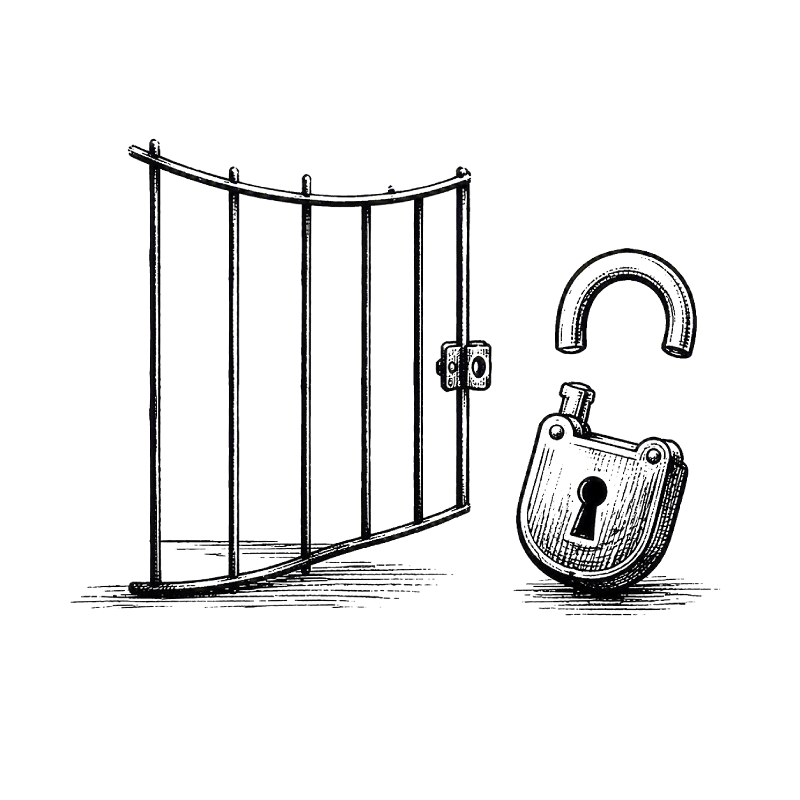
When you strip away the worrying policy briefs and tidy economic excuses, you arrive at quite a view. Step back from the spreadsheets and you can almost see the dialogue from our cover canvas playing out: fluid currents of Aegean ultramarine curling around crisp, orderly blocks of slate and birch—the river meeting the geometry without either having to surrender its shape.
Yet by trying to measure human connection through a blunt weekly quota, European surveys end up flattening these two entirely different rhythms beneath the exact same clumsy tape measure.
The European Commission’s policy brief Loneliness – an unequally shared burden in Europe lumps Southern and Eastern Europe into the exact same statistical bucket, declaring both regions to be lonelier and more socially isolated than the West and North.
On paper, that looks completely absurd. How can Cyprus—where three-quarters of the population (76.4%) see friends every single week—share the same institutional diagnosis as Poland, where that weekly contact drops to just 28.8%?
It doesn’t break our comparison. It exposes the blind spot baked into institutional surveys.
Brussels treats “loneliness” as a straightforward proxy for an empty room, a missing park bench, or an expensive cup of coffee. But subjective loneliness isn’t the same as an empty calendar. It is the painful gap between what you expect from human connection and what you actually get.
In the monochronic societies of Northern and Central Europe, expectations of privacy and scheduled quiet are the baseline. Spending an evening on your own with a book doesn’t feel like a societal failure—it feels like well-earned peace. In the polychronic Mediterranean, life is historically built around family and the παρέα. The cultural bar for connection is set sky-high. When your entire baseline assumes constant company, any emotional distance stings. A person can sit laughing with friends at a taverna three nights a week and still tick “lonely” on an EU survey simply because their everyday benchmark for company is so high that any quiet interval feels like an absence.
By flattening this into an “unequally shared burden” to be fixed with municipal programmes and public benches, the institutional lens completely misses the human reality. You cannot measure connection by counting park benches or pricing cappuccinos.
Does that make these standout numbers a cause for panic? Not in the slightest.
Let’s be crystal clear: none of this is to suggest that loneliness isn’t real. It is a chronic, isolating reality for millions across Europe, and nothing here seeks to trivialise it.
The problem is that using this standout metric to diagnose that ache is like trying to measure a pulse with a tape measure. You cannot take a blunt calendar count of weekly friend meetups, slap it into an EU spreadsheet, and claim you understand very much at all about the state of human connection. How often you sit across a table from a mate tells us plenty about your schedule, your culture, and how you manage your clock; it tells us almost nothing about whether you feel isolated, fulfilled, or quietly content.
A 28.8% friend contact rate in Poland isn’t a national emergency, just as 76.4% in Cyprus isn’t a guarantee of emotional nirvana. One culture recharges in the quiet sanctuary of its own four walls; the other recharges in the communal hum of the square.
Neither side is broken, and neither needs a bureaucratic rescue. Loneliness is far too complex to be diagnosed by counting café chairs or public park benches—and the numbers simply remind us that a good, connected life doesn’t look the same from every front door.

— generated by Gemini, September 2026
Two Operating Systems. The Look. “Just Call.”
You can share your deepest secrets over coffee, and still speak entirely different dialects of time.
Over to you
I love pulling apart numbers, the crunchier and bolder the better. I don’t pretend to be anyone special—just a curious person at a keyboard reading the fine print, looking at the data, and trying to make sense of everyday life. I’m not a sociologist, and I certainly don’t hold academic credentials in cultural anthropology.
The conversational tone isn’t meant to trivialise the real, debilitating weight of loneliness or dismiss the good intentions of community initiatives. This was simply me pulling on a statistical thread and following it where it led. If I’ve misread a metric, missed something obvious on the ground, or oversimplified the delicate rhythm of your week, tell me where I got it wrong.
As always, there are bound to be plenty more layers to this onion. Whether you recognise the effortless current of the παρέα, live by the quiet sanity of a neatly blocked calendar, or navigate the space somewhere in between—I’d love to hear your take. Join the conversation below!
 PUBLIC POLL • WHAT’S YOUR VERDICT?
Does infrequent Face-to-Face Contact Signal an “Epidemic of Loneliness”?
Cast your vote.
👥 0 votes recorded so far
 OFF THE RECORD • UNTRACKED
THE DISPATCH DROP —
Slip Us a Lead
Heard an official figure that sounds like nonsense on the ground? Give us the lead. We’ll check the records—if it’s solid, it becomes our next post.
Stored locally in our queue. We never record IP addresses or digital fingerprints.
Primary Sources
The Dossier
[ Click to Inspect ]
 ↓
↓
The Dossier
[ Click to Inspect ]
↓
The Canary (Ground Realities)
- Nicosia Tourism Board: “Taste Nicosia: The Brightest Capital of Europe” (October 2024)
- CBOS (Centrum Badania Opinii Społecznej): Czas wolny Polaków (Free Time of Poles), Research Report Nr 83/2026 PL (Fieldwork July 2026)
- Krakow Cafés Guide: “Krakow Cafés & Coffee Guide: Third Wave Culture and Sitting Rituals”
The Onion (Institutional & Policy Layers)
- CBOS: “Social and Emotional Life of Young Poles” (Public Opinion Research Bulletin, June 2025)
- European Commission (JRC): Who Feels Lonely in the European Union? (Joint Research Centre, Springer Open, 2024; DOI: 10.1007/978-3-031-66582-0)
- Instytut Pokolenia: Poczucie samotności wśród dorosłych Polaków (The Feeling of Loneliness Among Adult Poles) PL (Warsaw, 2022)
- European Commission: Special Eurobarometer 525: Sport and Physical Activity (Fieldwork 2022)
- Regner, Evelyn (MEP): Foreword to Loneliness in Europe: Determinants, Risks and Interventions (European Parliament / Springer, 2024)
- European Environment Agency (EEA): Who Benefits from Nature in Cities? Social Inequalities in Access to Urban Green and Blue Spaces Across Europe (EEA Briefing, Feb 2022)
- EEA Capital Cities Dashboard: “Percentage of Total Green Infrastructure, Urban Green Space, and Urban Tree Cover in EEA-38 Capital Cities” (Indicator Assessment)
- Numbeo Price Index: Comparative Cost of Living Audits for Cyprus & Poland (Commercial Café & Beverage Prices)
The Raw Ledger (Datasets & Official Statistics)
-
Eurostat Data Browser:
Frequency of Getting Together with Friends by Sex, Age and Educational Attainment Level
ilc_scp09Core comparative indicator tracking face-to-face contact frequency across EU member states. - Eurostat Statistics Explained: Quality of Life Indicators: Social Interactions Official thematic overview covering frequency of personal contacts, relationship satisfaction ratings, and perceived social support networks.
-
Eurostat Data Browser:
Average Usual Weekly Working Hours in Main Job by Sex, Professional Status and Full-Time/Part-Time
lfsa_ewhun2EU Labour Force Survey benchmarking weekly workplace hours across member states (DOI: 10.2908/lfsa_ewhun2). - Eurostat News: “Social Contact Statistics: Frequency of Getting Together with Friends” (Archive overview)
The Deep Read (Anthropological & Policy Texts)
- Hall, Edward T.: The Dance of Life: The Other Dimension of Time (Anchor Books / Doubleday, 1983) Seminal cross-cultural study establishing the structural divide between Northern European monochronic (M-time) compartmentalisation and Mediterranean polychronic (P-time) fluid engagement.
- European Commission Science for Policy: Loneliness – An Unequally Shared Burden in Europe PDF (JRC Policy Brief Series, 2018) EU analytical brief classifying geographic clusters of social isolation, conflating Southern and Eastern European demographics under identical policy prescriptions.
The Commentary

Did my ground-level view ring true to your week, or does your corner of Europe manage friendship and the clock in a way the surveys completely missed?
Zero cookies, no accounts, and no tracking. Drop a thought or story below.
Leave a Reply