

THE CANARY • THE REAL-LIFE POV
THE CANARY
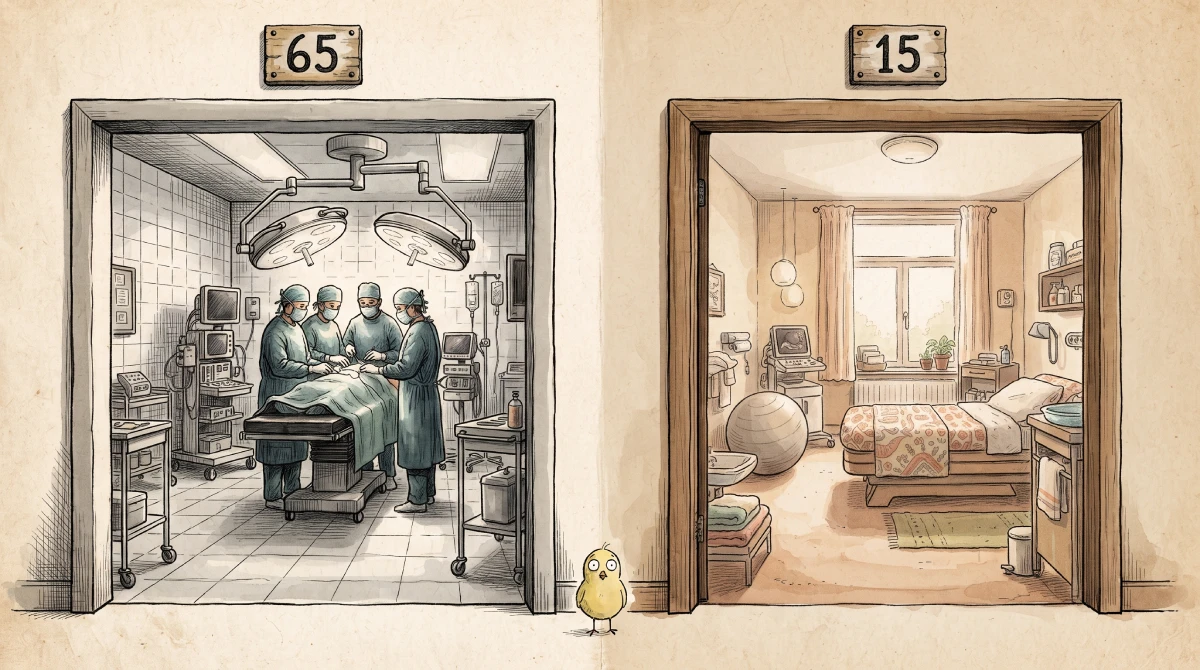
Well, that’s quite something: an over 4-fold difference in caesarean rates among member states of the EU. Why this stark contrast in 2026, when medical know-how is shared across borders and European standards are meant to be aligning?
The tale really needs to start with a look at what the birthing scenario is actually like, ‘boots on the ground’ at the two ends of the spectrum. What does giving birth in Cyprus typically look like compared to the Netherlands in 2026?
Boots on the Ground: Two Worlds of Delivery
Cyprus: The Surgical Assembly Line
You know the old line about not seeing the forest for the trees? In Cyprus, you can’t find the midwives for the doctors. They’ve been reduced to surgical scrubs and room prep. No primary caseload, practically zero autonomous deliveries, and community midwives providing low-risk routine care are nowhere to be found.
Cyprus operates on an obstetrician-led secondary care model. It runs a universal single-payer health system (GeSY) administered by the state (HIO), which directly contracts nearly every private clinic on the island, as well as public hospitals. Delivery with GeSY eligibility is essentially €0 (with a few small charges for scans and visits under €10). Crucially, direct access to the obstetrician’s door is wide open: a pregnant woman doesn’t need a referral. She can simply pick up the phone and book a private doctor (paid with public money) from day one. It is actually a completely different setup from Greece, Italy, or the UK, where private clinics are an expensive, out-of-pocket commercial choice and public coverage pays little to nothing toward them.
Childbirth is structured around isolated, unilateral decisions by a single doctor («Από τον έναν γιατρό…») rather than a maternity team that you might find elsewhere in Europe (e.g., community and clinical midwives, obstetric nurses, obstetricians, and maternity care assistants). The process is rather clinical: women are typically excluded from real-time decisions during labour and are just expected to follow proceedings, take the pen, and tick the box («ένα απλό “κουτάκι”» / a simple little box) when informed consent is required for a C-section. There is no shared decision-making between doctor, midwife (are they even present?), and patient.
Culturally, childbirth is considered an intervention-friendly affair, and medical management is fully expected in Cyprus. It is viewed as a doctor-led hospital event, not a natural “leave it and see how it progresses” physiological occurrence. There is an entrenched culture of fear around birth, and fear of pain means epidurals reign.
Scheduled surgery is generally the way to go—programmed like booking a dentist appointment. According to Ministry of Health data presented to parliament (and reported by the Cyprus Mail), of all the C-sections performed in 2021, 40% were pre-planned, and another 38% were officially logged as “mother’s choice”. Surgical intervention is just part of the baseline expectation, and requesting one is practically frictionless. But if over a third of all surgical deliveries are officially down to “mother’s choice,” we have to ask how that choice was engineered. If a woman is conditioned by a cultural dread of childbirth, reaching for scheduled surgery isn’t genuine autonomy. It is defensive compliance, driven by fear manufactured by the environment around her. Under those conditions, the offered surgical route becomes the only logical escape hatch.
So, stacked on top of the 40% already planned, another 38% goes down to “maternal request”, which means, you guessed it, the actual emergency rate was only 15–17%. The irony is not lost here: when you strip away the scheduling and the fear, the genuine medical need in Cyprus falls to the exact benchmark that the World Health Organization (WHO) has cited since 1985.
“There is no justification for any region to have a caesarean section rate higher than 10–15%.”
— WHO (1985)Netherlands: The Midwife Bastion
And then we have the Netherlands. Enter the old line again, but swap it around: here you can’t find the doctors for the midwives.
The situation in the Netherlands is substantially different. Simply put, frontline maternity care is built around midwives. Lots of midwives—self-employed, autonomous professionals working in independent, community-based practices (verloskundigen) in what is called midwife-led care. They are the primary care service, the first port of call for 90% of pregnant women in the Netherlands. So, yes, they are running most of the show. By default, all women go to a verloskundige (and birth centers) for uncomplicated pregnancies. Obstetricians and clinical midwives are kept in hospitals as secondary/tertiary care providers. As a baseline, they don’t deal with normal pregnancies and only step in for complex cases after referral. The missing 10% of pregnancies are those women with pre-existing high risk conditions whereby they bypass the primary midwife entirely from day one.
There is effectively no private surgical delivery market. Maternity care is built around independent primary midwives and regional public hospitals. The health infrastructure in the Netherlands is completely different from Cyprus. It isn’t a single public body that collects taxes and acts as the universal payer; instead, the Netherlands runs on a statutory framework called the Zvw (Health Insurance Act). It mandates that every resident must buy a basic health insurance package, sold by private, non-profit, and heavily state-regulated insurers. This basic package covers 100% of primary midwife care (with zero deductible payment). However, wrapped around this coverage are strict gatekeeper rules: insurers will only pay for secondary care if a formal referral is signed by the community midwife. If you demand a hospital room or an obstetrician on your own whim, be ready to foot the bill yourself.
The culture is very different, too. A strong societal ethos has normalised birth as a natural life event managed by a midwife, and that midwife-led ethos is preserved even inside the hospitals. There is national support for home birth as a normal choice, not an eccentricity. Core values center on shielding mother and child from unnecessary interventions (“gevrijwaard van onnodige ingrepen”) and over-treatment: unmedicated labor; feel the pain; deliver at home, birth centers, or hospital; intervene only when strictly necessary.
Even the heads of Dutch obstetrics defend this cultural rule. Writing in Veilig Bevallen, Prof. Dr. Otto Bleker noted that while the rest of the world ramps up interventions without medical need, Dutch practice clings to a completely different instinct: wait, trust physiology, and step in only when unavoidable. The country is stereotypically famous for its “painkiller-free home births” ideal. That’s slightly dated today: although home births (around 15–20%) remain a significant slice of the pie, that rate has declined over the last few decades, and the vast majority of Dutch women now deliver in outpatient day clinics (polikliniek). But even there, birth is still managed by a primary midwife without routine interventions, epidurals, or surgeons.


THE ONION • THE OFFICIAL SPIN
THE ONION
What factors might be driving the caesarean rate across EU countries? Shortcutting through my brainstorm, I came up with three candidates that aren’t particularly far-fetched:
- Healthcare system structure: Midwife vs. Obstetrician-led models
- Divergence in women’s choice (and how surrounding culture shapes it)
- The extent of the doctor’s choice (multifaceted: defensive medicine, skill drift, and financial incentives—more on this shortly)
So, let’s peel back the onion, layer by layer, country against country, and see what crawls out of the woodwork. Cyprus vs. Netherlands. Where do they rate on the Caesar-o-meter across these three metrics?
Layer 1: The Missing Midwife vs. The Burning Midwife
Cyprus: Obstetrician-led model — Where is the midwife?
With a doctor at the helm as primary care host and the midwife as room assistant, it logically follows that birth becomes a surgical event waiting to happen. Midwives here hold university degrees and legal qualifications to deliver babies independently. The bitter irony: legally and educationally, the difference between a Cypriot midwife and her European peers should be zero (it’s not actually—more on that in a second).
Instead, midwives in Cyprus are undercooked. Take an autonomous, university-trained clinical midwife, toss them into a system that only recognizes lone-doctor authority, and fold in a culture addicted to intervention. Season with clinical guidelines that gather dust on the shelf, bake under total obstetric control without a whisper of peer review, and voilà: a fully licensed practitioner reduced to an overqualified surgical prep assistant. Undercooked, underutilized, and professionally starved.
That probably explains why Cyprus has zero direct-entry undergraduate midwifery degrees. For completeness—because real life is rarely pure black and white—Cyprus does offer a two-year MSc in Midwifery. But there’s a catch: you can only take it after completing a four-year nursing degree. The system educates midwives as nurses first and treats midwifery as an optional add-on. Long before they set foot in a delivery room, they are thoroughly embedded in the hospital nursing chain of command. Faded and jaded from the outset. A nurse is not a midwife, but blur the boundary long enough and everyone treats them as assistants anyway. (As a small aside: clinical trainees across the Mediterranean face this exact dilemma—a recent 2026 appeal by Greek midwifery academics notes students already struggle to secure enough exposure to normal, unmedicated births in clinical placements just to graduate— ICM Letter, February 2026 – see references below).
Yup, this layer of the onion is rather shredded. Which leads nicely to the next question: if this is true of Cypriot-trained midwives, do they have the same EU rights as those in the Netherlands?
Answer: on paper, yes. In practice, absolutely not.
On paper, they are autonomous practitioners under EU Directive 2005/36/EC and Cyprus’s root statute, the Nursing and Midwifery Law (Law 214/1988), which has been amended up to 2020 in an attempt to align with Europe. This includes, among other things, letting EU-trained midwives register locally (though an autonomous practitioner from abroad would hardly trade their independence to become a theatre assistant) and ensuring a Cypriot MSc in Midwifery is recognized abroad. A neat little escape hatch for Cypriot midwives fazed by the lack of progression, satisfaction, and hope. So, locking it down, their professional qualifications are stamped and mutually recognised across EU borders.
Halt… whoa… let’s backtrack.
In no way can we say Dutch and Cypriot midwives are the same species of professional. While a Cypriot two-year master’s degree theoretically ticks the EU minimum box for qualification recognition alongside the four-year Dutch undergraduate degree, the clinical reality is countries apart. In practice, a Cypriot midwife’s day-to-day role and post-nursing training look far closer to a Dutch obstetric nurse than an autonomous midwife. A professional who has trained as a nurse and works in an environment dominated by a 60% caesarean rate simply doesn’t build the same clinical instincts as someone who spent four solid years immersed in primary care midwifery, learning to support physiological birth in living rooms, birth centres, and outpatient clinics.
Worse still, Cyprus appears to have copy-pasted the EU’s textbook of midwife competencies into its statute books without changing any of the real-world machinery. When they rolled out the General Healthcare System (GeSY Law 89(I)/2001), midwives were left stranded. They have no prescribing power, no independent professional standing outside nursing governance, and—most crucially—zero gatekeeper status. Pregnant women have direct, referral-free access to obstetricians from day one. Midwives have no protective regulatory framework to work independently without massive legal exposure. They are simply not the frontline.
We need to remember that clinical practice is a strictly national cuppa-tea for every country in Europe. The EU doesn’t dictate how a health service actually runs day-to-day—and that is where GeSY in Cyprus (and Zvw in the Netherlands) are completely free to develop their own separate flavours.
Netherlands: Midwife-led model — Where Is the Limit?
The Netherlands trains midwives as autonomous gatekeepers from four dedicated academies via four-year Bachelor programs. The pipeline into the profession is steady, direct, and flowing well.
Legally, their clinical remit is formidable. Their independent standing is anchored in the Individual Healthcare Professions Act (Wet BIG, Article 36). The law explicitly grants them independent authority over obstetric procedures (verloskundige handelingen) and specific surgical interventions (heelkundige handelingen)—such as episiotomies and complex suturing. They can manage uncomplicated deliveries and perform reserved procedures entirely independently. They are protected, valued, and clinically autonomous. No C-section happens without passing through their hands first.
Okay, let’s park for a second and regroup.
Hold on—is there a zebra in the house? Everything I’ve said seems so black and white. Is the contrast setting on “Cyprus vs. Netherlands” jammed?
Nearly 40% of Dutch midwives leave the profession within 15 years of graduation (Women and Birth, 2026). They report burnout, excessive on-call pressures, and the sheer impossibility of balancing life outside work. Over-pressured, over-utilized, and ready to pop. So while Dutch midwives report high initial engagement, their working-life expectancy is shocking. With the Cypriot midwifery vehicle parked up (abandoned?) and the Dutch one revving so hard the wheels look ready to fly off, we may see even more volatility ahead. Will caesarean sections start rising?
Layer 2: Caesarean: Undesirable vs. Expectation (The Woman’s Choice)
Cyprus: A Baseline Expectation (Conditioned by Dread and Frictionless Scheduling)
We established earlier that GeSY makes delivery essentially free at the point of use. But look at what happens when you combine zero financial friction with an interventionist culture: the entire birthing process naturally flows straight toward the operating theatre. Result: lots of C-sections.
That universal zero-copay reality does make me wonder: how many reported caesareans cost zero because patients are GeSY-eligible, and how many are paying out of pocket? Could medical tourism be inflating the stats? I can’t find a firm official breakdown, though figures floating around online suggest about 95% of births are GeSY-covered (without a firm source, so take that with a grain of salt—if anyone has this dataset, let me know in the comments). That said, birth tourism isn’t a massive factor here because Cyprus strictly enforces jus sanguinis (Civil Registry Law 141(I)/2002): birth on Cypriot soil does not grant citizenship.
Netherlands: A Clinical Undesirable (Shielded by Physiological Trust)
Here lies the mirror-image irony of “women’s choice.”
In the Netherlands, you have the world’s most fiercely protected physiological birth culture, and it costs the mother zero euros. Yet if a Dutch woman walks in and demands an elective caesarean simply because she wants one, she will hit a brick wall.
Unlike the Cypriot open door, Dutch healthcare does not treat major abdominal surgery as an on-demand consumer service. A woman cannot simply purchase or demand a surgical birth on the public dime; the system requires a binding medical indication governed by the national Obstetric Indication List (Verloskundige Indicatielijst, or VIL).
What about fear? If a woman suffers from severe tokophobia (extreme fear of childbirth), the clinical response isn’t for an obstetrician to simply nod, open their diary, and book a theatre slot. The protocol triggers a long, winding path: psychiatric counselling, birth-trauma therapy, and joint consultations where midwives, obstetricians, and psychologists confer before anyone even considers picking up a scalpel.
The paradox is stark: Cyprus grants frictionless “choice” that drives women directly onto the operating table. The Netherlands strictly limits individual surgical demand to protect women from unnecessary physical harm. The result? A caesarean rate pinned neatly to the WHO baseline.
Layer 3: Scheduled Wallets vs. Institutional Guardrails (The Doctor’s Choice)
Cyprus: The Untouchable Fee (Convenience, Carrots, and Frozen Sanctions)
Financial incentives favour surgery: faster procedures (45 minutes from first incision to stitch-up vs physiological labour lasting hours), predictable clinic hours, and scheduling convenience. Audits are remarkably rare, and without midwife gatekeepers or active clinical peer review, the lone doctor operates with near-total financial and operational autonomy (eek).
Cyprus did try to tackle this recently, though it promptly performed a classic policy face-plant. In January 2025, the Ministry of Health and the HIO rolled out an “Incentive and Disincentive” scheme (Announcement 1220 241NPO 2123). Doctors keeping rates under 40% were promised financial carrots, while those pushing past 50% faced penalties. For practitioners with rates above 90%, the state threatened a 35% cut to reimbursements.
Wait for it… the backlash. No prizes for guessing who wasn’t happy.
The obstetricians’ guild pushed back hard, arguing high rates weren’t about greed or schedules (golf anyone?), but driven by maternal requests, defensive medicine and a rise in complicated pregnancies via IVF (multiples, older mothers etc.). The pushback worked: the financial penalties were frozen until January 2027.
When the HIO finally introduced clinical guidelines in February 2026, the teeth were already gone. Instead of financial accountability to stem the high caesarean rates, the state settled for “continuing education” through workshops, seminars and self-assessment. And of course, this has left the “mother’s choice” loophole wide open: convenience stays intact, and the doctor still gets paid.
I’m not sure we can say much was achieved here. It’s hard to see this as anything other than an administrative retreat. A plan that desperately needed sharp teeth ended up as a wishy-washy, bureaucratic pantomime. Are they seriously expecting a few continuing education seminars and self-assessment forms to undo a 65% surgical default? Wishful thinking, and a great plot for the theater. I’m just not sure if it belongs in classical tragedy or comedy.
“Financial penalties were suspended until 2027 following pushback from gynaecologists, shifting the focus toward continuing medical education rather than ‘punitive’ measures.”
— Economy Today (Cyprus, July 2026; translated from Greek)
Incident Dossier
Netherlands: The shared pot (Protocols, Audits, and Zero Incentive)
On the Dutch side, the financial incentive to pick up a scalpel has been systematically engineered out of the system.
Hospital obstetricians work within salaried teams, taking personal profit off the table. And, more recently, maternity financing has shifted from individual payments across care sectors to a single integrated care payment. This move brings primary and secondary care under one umbrella, forcing everyone to work as a unified team inside regional networks called IGOs (Integrale Geboortezorg Organisaties). Instead of billing insurers separately, one single, all-inclusive price is paid to the entire maternity organisation for each patient’s complete nine-month pregnancy pathway.
This means no single player in the maternity team can claim additional expenses for services (or surgeries in this case). Everyone on the team—from independent community midwives to hospital obstetricians, clinical midwives, and obstetric nurses—must divide that single pot of money. In this scenario, surgery is not a profit driver; it is simply an additional overhead on the final bill and will never equate to an extra payout. An unnecessary caesarean is an inefficiency, rather than an opportunity.
Then comes the scrutiny. Where we have in Cyprus some educational programs, voluntary self-assessments and mandatory logging forms that still leave the “mother’s choice” loophole wide open for full payment, in the Netherlands we have relentless, forensic oversight.
Through regional audit committees—the Perinatale Audit Nederland (PAN)—clinical records are continuously dissected against the rigid national rulebook, the VIL. Nothing escapes the eagle-eyes of regulation. In reality, this means that any obstetrician penciling in a caesarean into an easy surgery slot to avoid a midnight vigil must be prepared to defend that decision in front of the rest of the multidisciplinary maternity team.
In an environment like this, a doctor reaching for the scalpel out of convenience isn’t just unprofitable—it guarantees an exhausting interrogation by a room full of scrutinising peers. When non-emergency surgery brings neither cash nor convenience, the doctor’s choice looks remarkably simple: don’t touch the scalpel.
Layer 4: The Lost Craft vs. Systemic Death
Cyprus: The Atrophied Hand? (When Even Obstetricians Can’t Escape the Knife)
Then I unearthed another layer. It applies directly to the Mediterranean context, uncovered in recent clinical research from neighbouring Greece (Christopoulos et al., Healthcare/MDPI, 2025). Given the cultural and clinical symmetry between Cyprus (65.1%) and Greece (60.6%), this gives us an extraordinary look behind the curtain.
Five fragments stand out. Let’s run quickly over the first three, since we’ve already touched on them:
1. The missing midwife:
(check, already covered).
2. Maternal choice:
The study found 90% of women actually want a natural birth; only a tiny 10% sliver explicitly ask for surgery. That aligns with what we unpicked earlier: that 38% slice of C-sections logged as “maternal choice” isn’t organic demand—it’s defensive compliance driven by an anxious environment. We know the story here, so let’s move on.
3. Defensive medicine:
Let’s pause on this one, because it came up earlier by the obstetricians’ guild in Cyprus. Defensive medicine practices stem from doctors working in high-pressure, high-risk litigation environments. With lawsuits flashing before their eyes, pre-emptive surgical intervention is done to avoid legal liability in case of complications. For example, 18.5% of sections in Greece are triggered by the subjective interpretation of fetal heart monitoring. Defensive panic, a what-if scenario, and sure enough the mother is wheeled in for surgery in the blink of an eye.
4. The Lost Craft:
This is the fragment I genuinely didn’t expect: the atrophied hand. In Greece, 37.2% of obstetricians admit they lack training in instrumental delivery (ventouse or forceps). Consider the reality: what happens when labour stalls during the final pushing stage? In a Dutch hospital, an experienced obstetrician uses vacuum extraction or forceps to assist. In an environment where almost 40% of doctors were never properly taught how to use these instruments, it goes without saying that the scalpel is the only remaining option. In this logic, the caesarean isn’t convenience, maternal desire, or profiteering; it is the direct consequence of lost medical craft.
5. The Doctor’s Paradox:
And lastly, the fifth and final tragic doctor’s paradox: the collapse of vaginal delivery even among doctors’ own families. Let’s ground ourselves again. Obstetricians are humans with families, and they know the biology better than anyone. 78.8% of obstetricians surveyed preferred natural birth for their own children. Yet, looking at these statistics, for any of their children born after 2015, vaginal birth collapsed to just 28% (down from 93.8% in the 1970s).
So regardless of their own private family preferences, the machinery of surgical intervention is so all-prevalent and consuming that even though 8 in 10 want natural birth, 7 in 10 end up under the knife. The system defeats even the people holding the scalpel. That is the real tragedy.
Now, an immediate objection to this 4th layer of the onion might be: ‘Greece is not Cyprus; Cyprus has the GeSY universal billing framework, while Greece runs on an entirely different commercial and public mix.’ Yes, this is true on paper. Financial mechanisms are indeed very different, but I propose that their clinical umbilical cord is not dissimilar. Cypriot and Greek obstetricians emerge from the exact same university training pipelines, they sit in the same professional symposia, share identical defensive medicine instincts, and operate within the same Mediterranean cultural and clinical mindset. So, a little peek under the curtain in Greece gives you an impression of what is likely happening inside Cyprus. The mirror is almost flawless.
Netherlands: Systemic death (When a “Perfect” System Chews Up Its Own)
So, what’s on the 4th onion layer when we dig deeper into the Dutch system?
If Cyprus suffers from an existential vacuum of primary midwifery, the Netherlands presents the inverse paradox. It is a celebrated world-class model; the infrastructure is grand and the low-intervention philosophy is sound. But this model is running entirely on the fumes of an exhausted workforce. The midwives, the primary frontline, are burning. So why the smoke?
A series of empirical studies by Liesbeth Kool and colleagues, and national data trackers can help us peel back this last layer. It turns out that the system which is so successful at keeping caesarean rates low has over-evolved, super-engineered itself and bloated with so much regulation that it is chewing up its own workforce. And the data reveals how.
After pushing past the standard workplace grumbles (pay, responsibility, liability etc.) a few strands of madness appear. These are the 3 big ones that stand out.
1. The On-Call Monster
So, we know that nearly 40% of Dutch midwives jump ship within 15 years, but why? The workforce census from NIVEL makes your eyes water. It’s enough to make anyone wave a white flag:
Self-employed community midwives worked an average base workweek of 41.7 hours, and then piled on an extra 54.4 hours per week of on-call services and 44.7 hours of standby duty. Okay, so sure, only a fraction of those standby hours actually turned into active clinical time (a modest 6.7%). But active or not, the sheer psychological weight of constant readiness crashes and burns any kind of work-life balance or sanity. Hours like these are an express ticket to burnout.
“At one point, the night shifts were causing me so much stress that I was suffering from stomach ache two days in advance. Eh, so almost all week I would have this sort of brick in my stomach, because I had to do another night shift… how was I going to do this? After the night shift, I then had to do home visits for 12 hours on end, I don’t know, just going on and on for 24 hours”
— (midwife P06), Kool et al., Women and Birth (2022)Burn-out, defined: constant on-call readiness and 24-hour shifts driving long-term attrition and nocturnal exhaustion.
2. The Workforce Imbalance
The second pressure point is down to a demographically skewed workforce. Experienced midwives are an increasing rarity among the ranks. Over 61% of Dutch midwives are under the age of 40, with a median age of 37 years. Very young compared to UK midwives (median age of 47).
With youth comes energy and motivation, but it can quickly slide into frustration and withdrawal without the glue of years of career self-investment and professional hardiness. Research shows that more experienced midwives more often cite a deep-seated passion for midwifery as a reason to continue.
Flipping careers is just too easy for newbies. Combine that with classic administrative overload, rocky partnership dynamics, and a punishing on-call structure, and the trap snaps shut. Newly qualified midwives (NQMs) are uniquely at risk due to a lack of experience and support.
“What I was missing a bit was a sort of general safety, or maybe more of a culture in which, when you have just finished your studies, you are more supported by others, or it is normal to discuss cases and things.”
— (Midwife P17), Kool et al., Women and Birth (2022)Stepping into practice without peer support feels like a free-fall off the graduation bus. Mentoring, debriefs, and a friendly colleague to pick up the phone when things hit the fan? Gone. Replaced by regulations, paperwork, and colleagues too depleted to help even if they wanted to.
3. The Setting Divide: Hospital vs. Community Tensions
There are distinct differences in roles between community and hospital environments. Given that the vast majority of Dutch midwives work in community settings (about 70%) and fewer in hospitals (30%), dissatisfaction with the overall organization of care is a recurring complaint across the studies.
Making it worse, though, is the internal fracturing of relationships and cooperation within the maternity teams. Disagreements on case decisions between primary midwife-led birthing centres and hospital-based obstetric teams flare up often. When these channels of communication are not greased and smooth, the pipeline of care becomes a friction zone and a massive source of work-related stress. Definitely a contributing factor: if the work environment isn’t rich, polite, and respectful, toxic work teams can turn daily practice into an exhausting trench war.
Two countries, two complete extremes. Cyprus never established primary midwifery care, opting instead for unchecked surgical scheduling; the Netherlands built an enviable, gold-standard primary infrastructure that runs its own midwives into the ground.
With both models laid bare, what might it actually take to fix them?

THE OPEN DOOR • QUIET AGENCY
THE OPEN DOOR
The mirror is uncomfortable, and the reflections are skewed in opposite directions.
If Cyprus wants to turn this ship around, nobody gets to sit back and do things the old way. Doctors, clinics, policymakers, and families will all have to change their habits. And it certainly can’t be held hostage by guild lobbying. There is an established low-intervention model in the Netherlands: borrow its structural strengths, but steer clear of its human wreckage.
Two Systems, Two Dilemmas: The Path Forward
Cyprus: Five Exits from the Surgical Trap
Here goes. To reduce the Cypriot rates of caesareans, five ideas—though half-formed and not exhaustive, hands up from my humble self—are central:
1. Protect the Obstetricians (and end Frictionless Surgery on Demand):
Build a legal and clinical fortress around doctors so they can practice in a low-pressure, low-litigation environment without dreading personal ruin over an unpredictable natural labour. Don’t reinvent the wheel—Dutch clinical protocols (VIL) work, so adapt them. Decisions should be shared, audited, and peer-reviewed, not pinned on one isolated, stressed individual.
In parallel, public funds should eliminate elective surgeries that lack documented clinical indications. Moving past a tick-the-box convenience culture means requiring audited second opinions for non-emergency sections and providing clinical counselling pathways for birth anxiety rather than defaulting to surgery.
2. Build the Gatekeeper Pipeline:
Open four-year direct-entry undergraduate midwifery programs. Not nurses with a compressed midwifery add-on course—midwives, trained as primary autonomous practitioners from day one. If Cyprus lacks enough natural hospital births for clinical sign-offs, set up Erasmus partnerships with Dutch or Scandinavian maternity clinics. In addition, existing nurse-midwives need accessible bridging programs to upgrade their competencies to match the four-year standard. A bit of short-term pain, but an essential step to protect the integrity of the profession.
3. Reskill the Doctors:
Mandatory continuous professional development in instrumental deliveries. If nearly 40% of doctors can’t confidently operate a ventouse or forceps when labour slows at hour 14, fix it in simulation labs. Give doctors their hands back so surgery isn’t their only default play when cardiotocography monitors start bleeping. Alongside that, bring in training modules focused on multi-disciplinary team communication between obstetricians, midwives, and patients.
4. Reform Hospitals and Community Infrastructure (which may need building from scratch):
Policies and regulations must be installed to protect the collaborative workflow between doctors, hospital midwives, and community midwives. We need institutional practices that actively dismantle the lone-voice doctor dynamic and normalise shared clinical management. Hospitals have a massive role to play in educating expectant mothers on how team-led birth actually works. And please, can we finally install the clinical infrastructure for Entonox (gas and air)? An epidural and unmedicated agony shouldn’t be the only two choices on the table. Offer intermediate pain management options so women aren’t backed into a surgical corner.
5. Reset the Culture Around Women’s Choice:
This deserves its own spotlight, but it touches every layer above. When 90% of women say they want a natural birth, the tired narrative that sky-high rates are driven by “maternal demand” falls apart. What really needs shifting is the surrounding culture of fear, fatalism, and the automatic expectation of surgery. Support and fund grassroots NGO programmes like Birth Forward that educate families, demystify physiological birth, and advocate for collaborative maternity care.
Netherlands: Three Shields for the Primary Front line
The Dutch paradox is simpler, but no less urgent: the philosophy is sound, but the human machinery is cracking. If the goal is to keep low-intervention birth alive without sacrificing the midwives who deliver it, three structural repairs stand out:
1. Dismantle the On-Call Monster:
The heroic 24-hour solo coverage for midwives has to go. If the funding framework has already integrated, the actual rotas have to catch up. Regional midwife networks and cooperatives need to pool on-call coverage across shared rotas with strictly capped continuous-duty windows. Independent practices don’t have to surrender their autonomy to do this—they keep their own clinics and personal patient relationships during the day, while sharing the night-time on-call burden across wider regional pools.
And standby duty can no longer be treated as invisible, “free” time. If a midwife is on standby, living in a state of permanent alertness with all the domestic havoc that brings, the system must formally account and compensate for it.
2. Build the Post-Graduation Safety Net:
Stop throwing newly qualified midwives straight off the graduation bus into solo practice. Professional resilience has to be built, not just expected. They need protected mentorship right out of university, routine debriefs after complex cases, and a designated senior colleague on call who can field an urgent question when things get hairy. Having that backup turns an agonising, isolated decision into an instant one—it’s like upgrading the midwife vehicle so the wheels don’t fly off on the first rough patch.
It also puts a priceless resource to proper use: the long-term survivor, the experienced midwife. It’s madness to waste decades of hard-won instinct instead of using these veterans as the anchor for the newcomers. Take away that terrifying isolation of private practice, and you might actually convince people to stay in the job.
3. Defuse Hospital-Community Friction:
Turn “integrated care” (Integrale Geboortezorg) into actual working respect, not just a shared billing pool. The real clash isn’t over money; it’s a culture clash at the hospital threshold. Regardless of disagreements over how, when, or why a woman was transferred, that handover has to be a smooth, respectful relay—not a cross-examination of the midwife’s prior management.
In short: design the system carelessly, and it crashes; over-engineer it without supporting the drivers, and the wheels come right off.
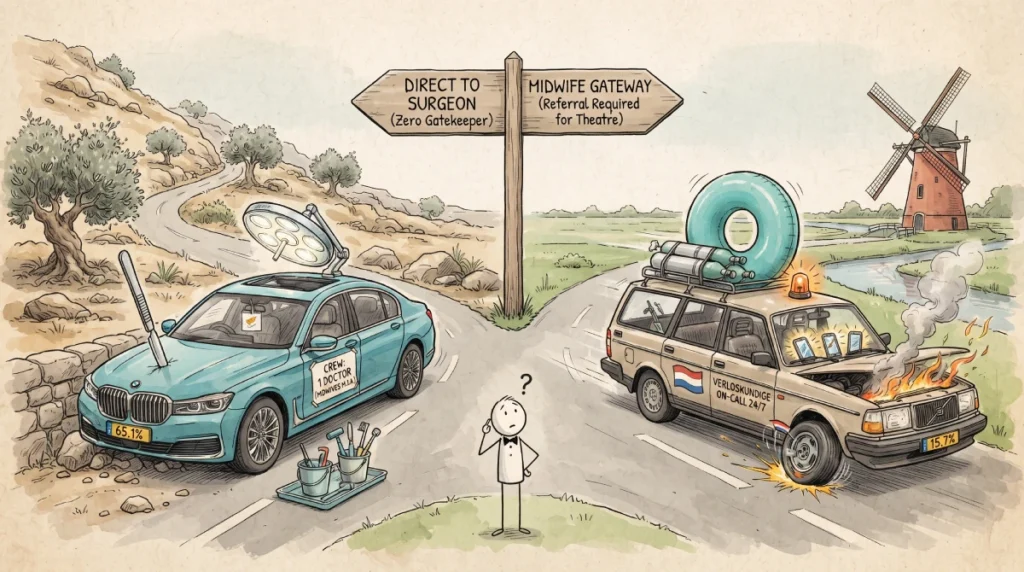
—THE Missing VS. The Burning MIDWIVES: Parked In the Wall at 65.1%, Shedding Wheels at 15.7%.
Over to you
I’ve really enjoyed delving into these numbers. I don’t pretend to be anyone special—just a curious person at a keyboard reading the fine print and trying to make sense of it all. I’m not an academic, and I certainly don’t hold clinical credentials in this field.
The conversational tone isn’t meant to trivialise a delicate subject or belittle anyone working on the front line. This was simply me pulling on threads and following the data where it led. If I’ve misread a metric, missed something obvious on the ground, or inadvertently botched the mechanics, tell me where I got it wrong.
There are bound to be plenty more layers to this onion. Whether you work inside either system, lived it from the bedside, or simply have an informed view from the outside—I’d love to hear your take. Join the conversation below!
 PUBLIC POLL • WHAT’S YOUR VERDICT?
Without independent community midwives, is high-intervention birth inevitable?
Cast your vote.
👥 0 votes recorded so far
 OFF THE RECORD • UNTRACKED
THE DISPATCH DROP —
Slip Us a Lead
Heard an official figure that sounds like nonsense on the ground? Give us the lead. We’ll check the records—if it’s solid, it becomes our next post.
Stored locally in our queue. We never record IP addresses or digital fingerprints.
Primary Sources
The Dossier
[ Click to Inspect ]
 ↓
↓
The Dossier
[ Click to Inspect ]
↓
The Canary (Ground Realities)
- Cyprus Mail: “Incentives to reduce C-section rates introduced” (17 July 2024)
- WHO: “WHO Statement on Caesarean Section Rates (WHO/RHR/15.02)” (April 2015)
- Birth Forward: «Η Πρόεδρος του Birth Forward στην εκπομπή “Από Μέρα σε Μέρα” του ΡΙΚ για την καισαρική τομή» EL (20 April 2026)
- New to Cyprus: “Having a baby in Cyprus: what it costs under GeSY, and what it costs without it” by Volha Bendzik (Reviewed by Harris Koufettas) (Updated 8 September 2026)
- DutchNews.nl: “A beginners guide to babies and childbirth in the Netherlands” (19 April 2025)
- Beatrijs Smulders: Official Practice & Publications Platform NL (Expert commentary, memoirs, and standard Dutch obstetric handbooks like Veilig Bevallen)
The Onion (Institutional & Policy Layers)
- Philenews: «Θέλουν τις αυξήσεις, αρνούνται το πέναλτι για τις καισαρικές – Τι αντιπροτείνουν οι γιατροί» [They want the raises, they reject the penalty for C-sections – What doctors propose instead] EL (18 July 2024)
- In-Philenews: “Cyprus tackles soaring caesarean section rates with financial incentives” (17 July 2024)
- In-Philenews: “Gynaecologists critical of proposed penalties for C-sections” (18 July 2024)
- In-Philenews: “Cyprus targets high caesarean rates with carrot-and-stick approach” (3 January 2025)
- Ygeia-News: «Κίνητρα και αντικίνητρα στους γυναικολόγους με στόχο την προώθηση του φυσιολογικού τοκετού» [Incentives and disincentives to gynecologists with the aim of promoting normal childbirth] EL (31 December 2024)
- Economy Today: “Καισαρικές στο ΓεΣΥ: Η πρώτη αποτίμηση και οι ενστάσεις” [Caesarians in GeSY: The First Assessment and Objections] EL (6 July 2026)
- OAY / GeSY: Σχέδιο Κινήτρων και Αντικινήτρων για τη Μείωση των Καισαρικών Τομών [Incentive and Disincentive Scheme for the Reduction of Caesarean Sections] PDF • EL (OAY Official Circular / Guidelines)
- Women and Birth (2026): Kool et al., “Occupational well-being in community and hospital midwives in the Netherlands: A cross-sectional study” (Women and Birth 2026, 39(2), 102182) Empirical research documenting workforce sustainability challenges, high burnout rates, and career attrition among independent community-based and hospital midwives in the Netherlands.
- Bleker, Prof. Dr. O. P. Foreword to Veilig Bevallen (Safe Childbirth) by Beatrijs Smulders (Kosmos Uitgevers, 2008) On Dutch clinical obstetrics clinging to physiologic non-intervention and protecting women from unnecessary surgical escalation.
- Kenens, R., van der Velden, L., Vis, E., & Batenburg, R. (2020): Cijfers uit de registratie van verloskundigen: Peiling 2017 NL (Nivel – Netherlands Institute for Health Services Research) Comprehensive national census and registration data tracking midwife practices, workforce distributions, and operational metrics in the Netherlands. (Overview page)
- Feijen-de Jong, E. I., van der Voort-Pauw, N., Nieuwschepen-Ensing, E. G., & Kool, L. (2022): “Intentions to leave and actual turnover of community midwives in the Netherlands: A mixed method study exploring the reasons why” (Women and Birth, Volume 35, Issue 6, E573–E582) Mixed-method empirical research exploring professional burnout, intentions to leave, and actual turnover drivers among community-based midwives.
- Vereecken-Schoo, A. M., Kool, L., de Jonge, A., & Feijen-de Jong, E. I. (2026): “Intention to stay in the profession and the role of experience among community and hospital midwives in the Netherlands: a cross-sectional study” (Women and Birth, Volume 39, Issue 3, 102216) Cross-sectional study examining career longevity, retention factors, and the influence of professional experience among community and hospital-based midwives.
- Zorginstituut Nederland / KNOV: Verloskundige Indicatielijst (VIL) [Midwife Indication List] NL (National obstetric indications protocol governing primary vs. secondary care boundaries)
The Raw Ledger (Datasets & Official Statistics)
-
Eurostat Data Explorer:
Surgical Operations and Procedures Performed in Hospitals by ICD-9-CM
hlth_co_proc3Aggregated inpatient caesarean deliveries across EU member states. Extracted using Eurostat classification code CM74_CAE (ICD-9-CM codes 74.0 to 74.2, 74.4, and 74.99). -
Eurostat Data Explorer:
Demographic Balance: Live Births and Crude Birth Rate
tps00204Total national annual live births used as the statistical denominator for calculating percentage incidence across member states: Rate (%) = (Hospital C-Sections / Total Live Births) x 100. -
Eurostat Statistics Explained:
Surgical Operations and Procedures Statistics
Official thematic overview covering EU-wide hospital surgical intervention frequencies, including regional breakdowns and methodology for ICD-9-CM classification code
CM74_CAE.
- Republic of Cyprus: Nursing and Midwifery Law EL (Law 214/1988, as amended through 2020)
- Republic of Cyprus: General Healthcare System Law EL (GeSY Law 89(I)/2001)
- Cyprus Gynaecological and Obstetrics Society (CGOS / ΠΜΓΕ): Official Professional Body & Position Statements [Παγκύπρια Μαιευτική και Γυναικολογική Εταιρεία] EL (Professional representation, clinical guidance, and institutional responses to national health insurance policies)
- Overheid.nl (Wet BIG): Wet op de beroepen in de individuele gezondheidszorg, Article 36 (Midwife Reserved Procedures) NL (Netherlands)
- KNOV / Richtlijnendatabase: National Midwifery and Obstetric Guidelines (Verloskundige Zorg) NL (Royal Dutch Organization of Midwives & NVOG collaborative clinical standards)
- Dutch Association of Obstetrics and Gynaecology (NVOG): Official Professional Body & Clinical Policies [Nederlandse Vereniging voor Obstetrie en Gynaecologie] NL (National obstetrician professional association, clinical quality standards, and integrated maternity care [Integrale Geboortezorg] policy framework)
The Deep Read (Clinical Studies and Further Reading)
- J. Clin. Med. (2025): Christopoulos et al., “Mode of Delivery in Greece: A Study of Obstetricians’ Personal Preferences Regarding Delivery of Their Offspring” (J. Clin. Med. 2025, 14(7), 2444) Documentation of instrumental delivery skill erosion (37.2%) and defensive intervention rates.
- ICM & Independent Midwives Appeal: Letter Regarding Revisions to Midwifery Standards of Proficiency PDF • EL (Feb 2026)
- Birth Forward NGO: Official Advocacy & Grassroots Platform (Cyprus, est. 2015) Member-led organization advancing evidence-based maternity care, human-rights standards, and physiological birth advocacy to counter the over-medicalisation of childbirth in Cyprus.
- Smulders, Beatrijs: Bloed (2021) & Oogst (2024) [Blood & Harvest: Memoirs of a Midwife] NL (Nijgh & Van Ditmar) Candid autobiographical accounts tracing the evolution of Dutch obstetric care, bodily autonomy, and the realities of community-based midwifery from the 1950s through the 1990s.
- Smulders, Beatrijs et al.: Women Giving Birth (Celestial Arts, 1995) English translation showcasing the Dutch philosophy of physiological birth, home births, and active birthing postures through direct parent interviews and clinical insights.
The Commentary

Has the birthing culture in Cyprus drifted too far toward the operating theatre to ever turn back, or would autonomous, midwife-led clinics change the game?
Zero cookies, no accounts, and no tracking. Drop a thought or story below.
Leave a Reply